얼음도 김도 다 물이래요 🔬
그리고 내가 만든 피자 한 판 🍕
Science and cooking — an awesome Wednesday. The students brought a lot of positive energy today, and it went straight into two things that turned out to have more in common than you might expect: how water changes state, and how a pizza gets built. Both are about what happens when heat is added, and both need a plan before you start.
💧 Water, in Three States Solid · liquid · gas
The science lesson began with the simplest molecule the children know by name: H₂O — two hydrogen atoms and one oxygen atom. From that single starting point, the whole board filled up.
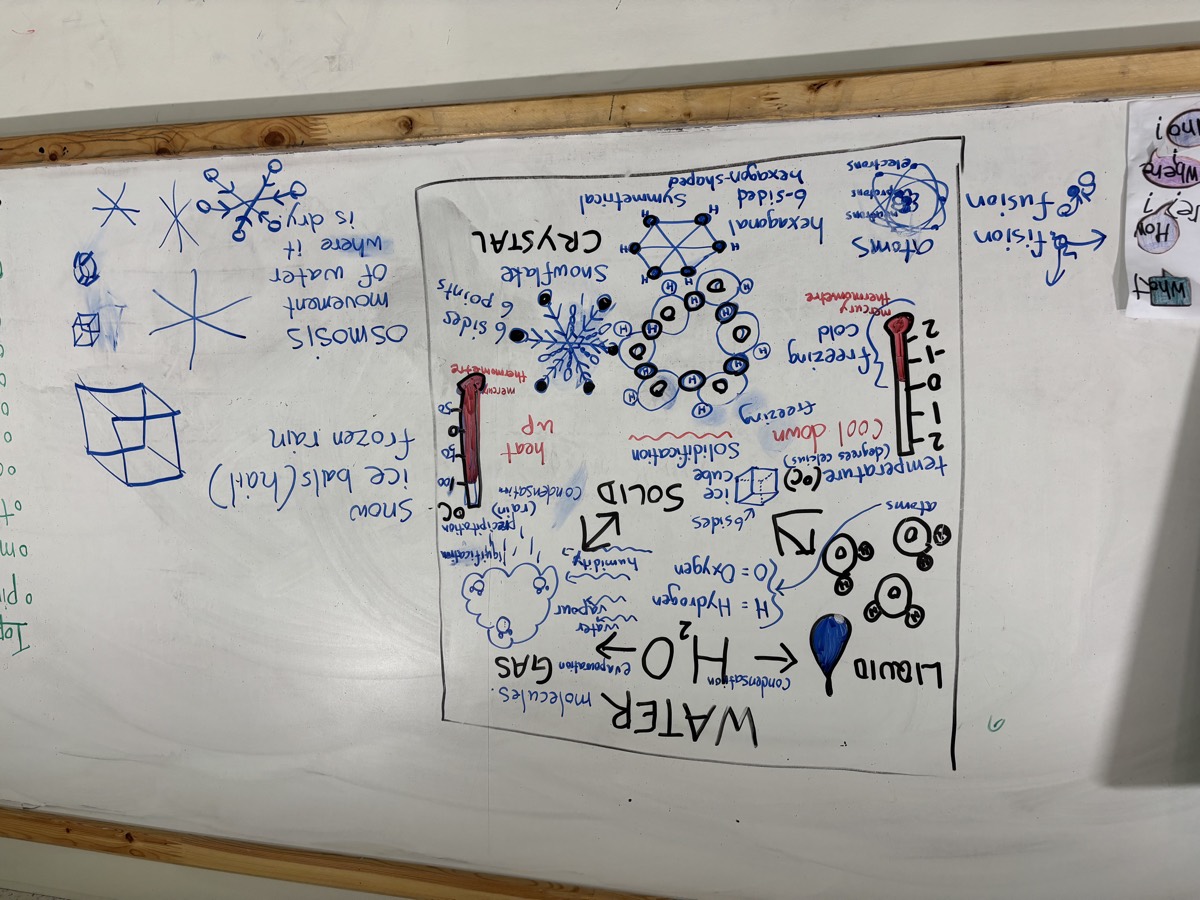
We followed water all the way around the cycle and gave every arrow its proper name. Heat it up and it evaporates into gas — water vapour, humidity, clouds. Cool it down and it condenses back into liquid, then liquefies and falls as precipitation. Cool it further and solidification takes over: freezing, ice cubes, snow, hail, frozen rain.
Temperature is what decides which face water shows, so out came the mercury thermometer and the degrees Celsius scale: above zero, below zero, and the freezing point exactly in between. Then the best part — the snowflake. Frozen water molecules do not stack randomly; they lock into a hexagonal crystal. That is why every snowflake has six sides and six points, and why it is always symmetrical.
We finished with a word the older students took home with them: osmosis — the movement of water toward where it is dry.
Vocabulary from today’s board
atoms · molecules · evaporation · condensation · liquification · precipitation · solidification · hexagonal · symmetrical · crystal · osmosis
🍕 Design Before You Build Plan it, then make it
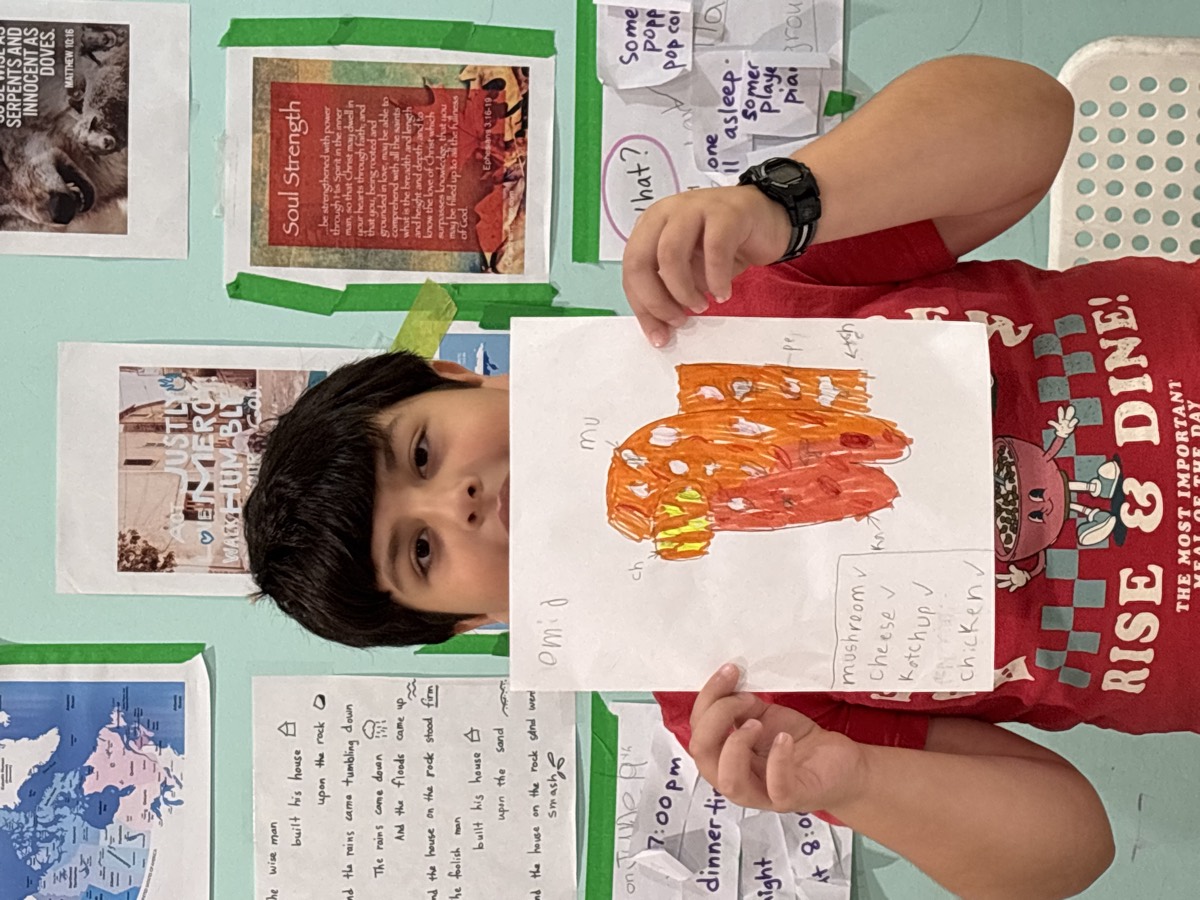
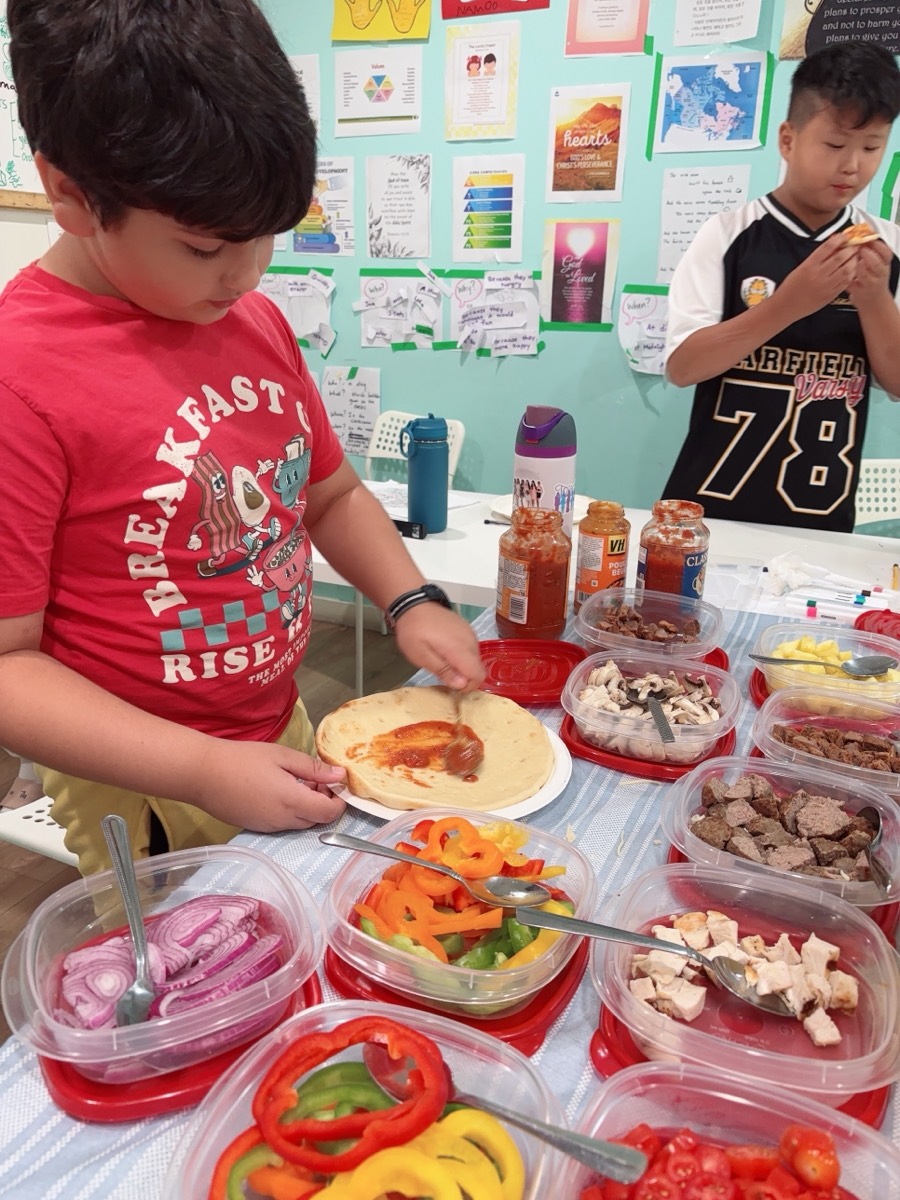
Then the classroom became a kitchen. Before anyone touched an ingredient, every student had to design their pizza on paper first — draw it, label the toppings, and check off the list. Deciding in advance is a skill, and it saves an awful lot of hesitating at the topping table later.
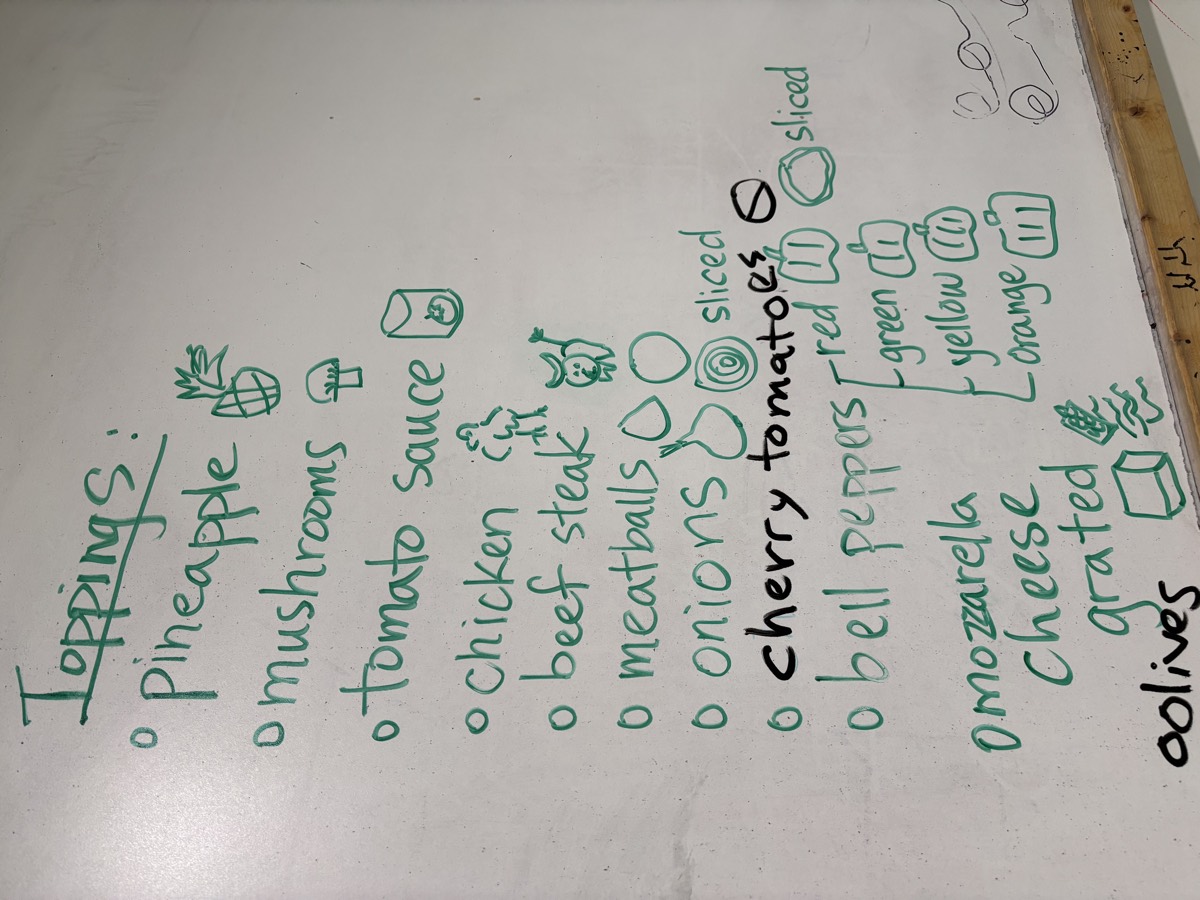
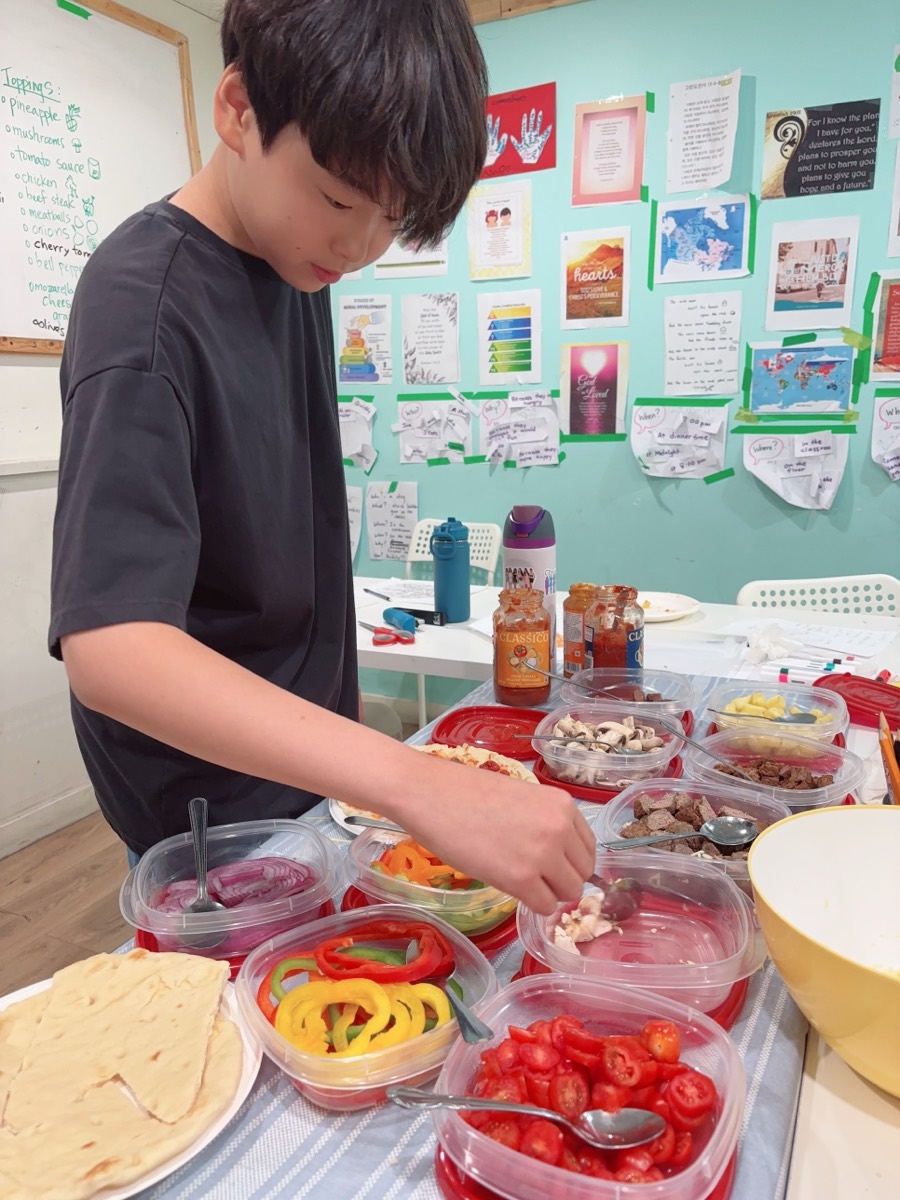
The toppings board was a small English lesson of its own. Reading it meant reading food vocabulary, quantities and colours: pineapple, mushrooms, tomato sauce, chicken, beef steak, meatballs, onions (sliced), cherry tomatoes, olives, grated mozzarella cheese — and bell peppers in red, green, yellow and orange.
🧑🍳 Building It Grate · spread · scatter
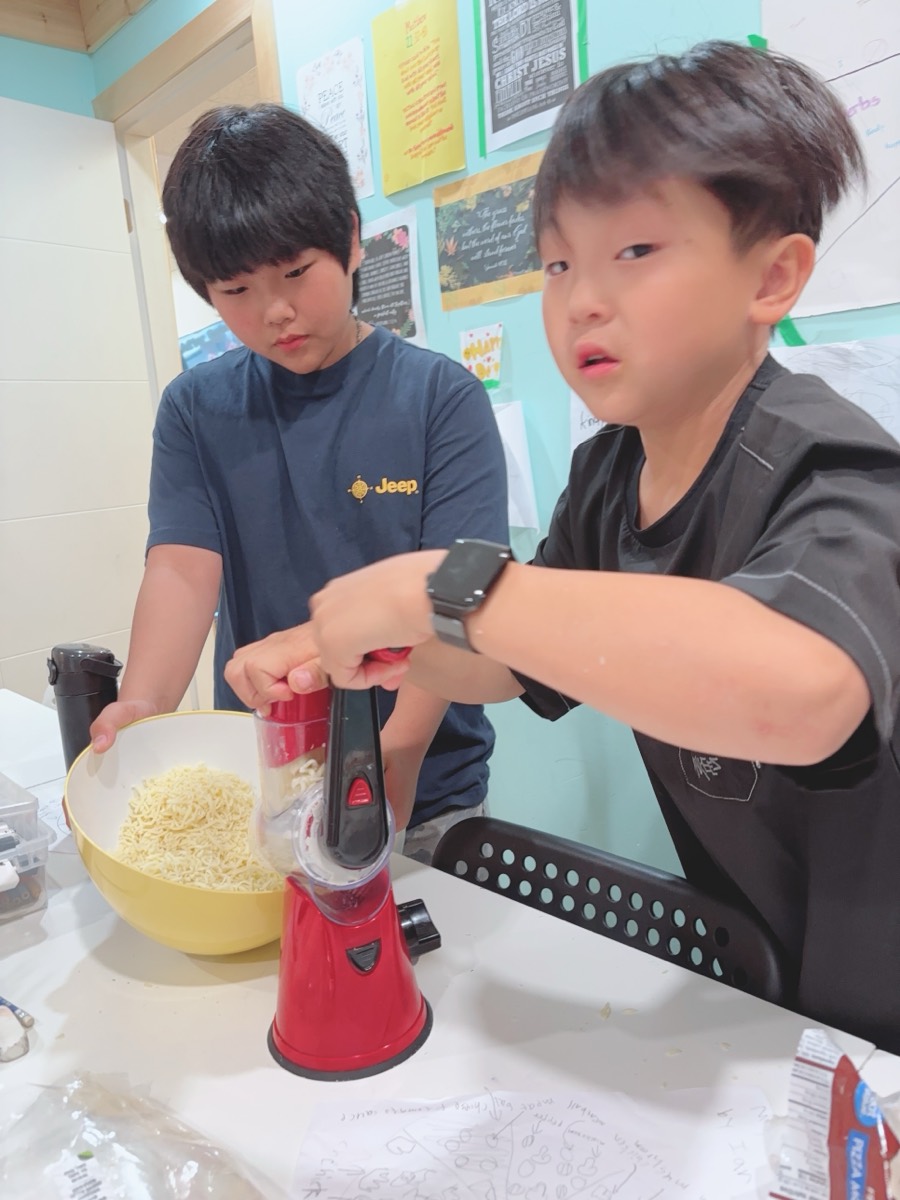
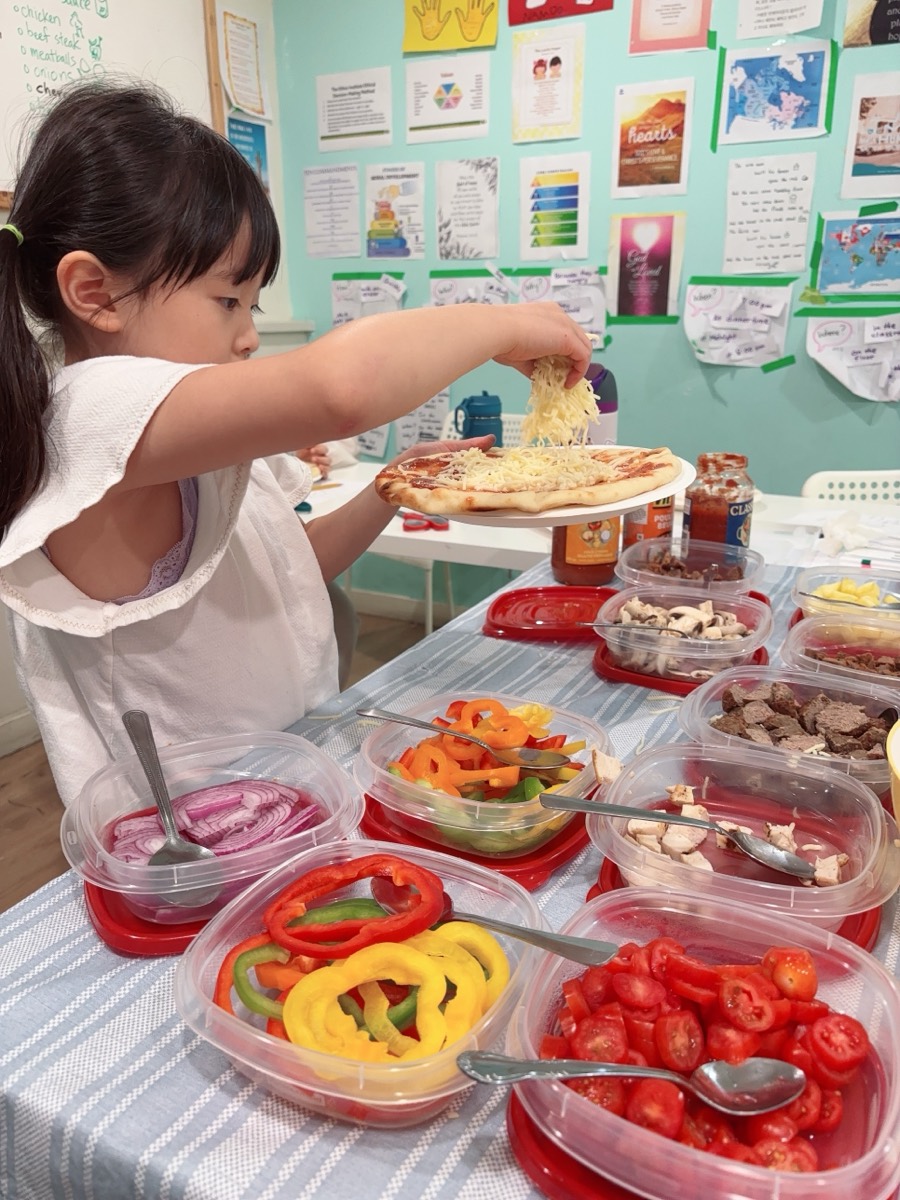
Everything on the table had to be prepared by the children themselves, and the mozzarella came first. Taking turns on the grater is a job that needs two hands, a steady grip and a little patience while somebody else has a go.
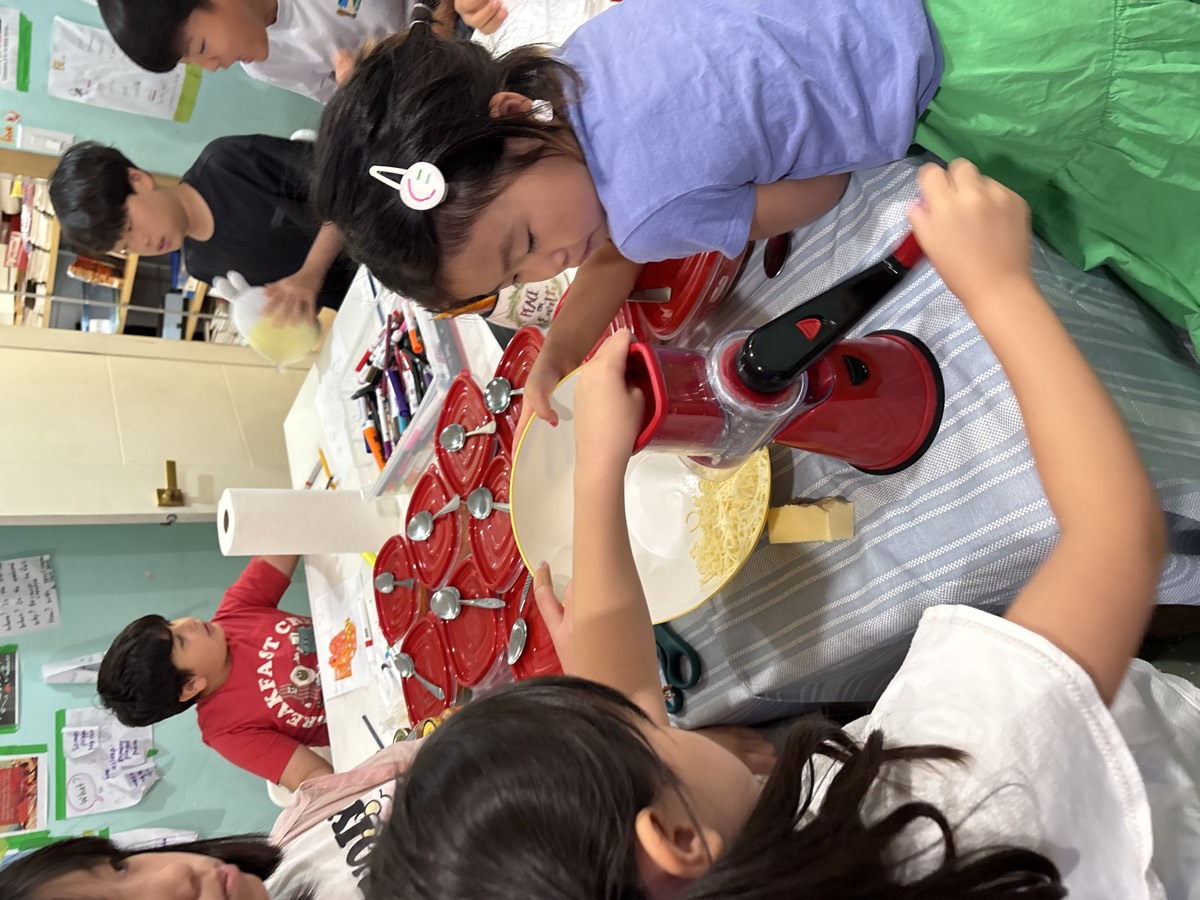
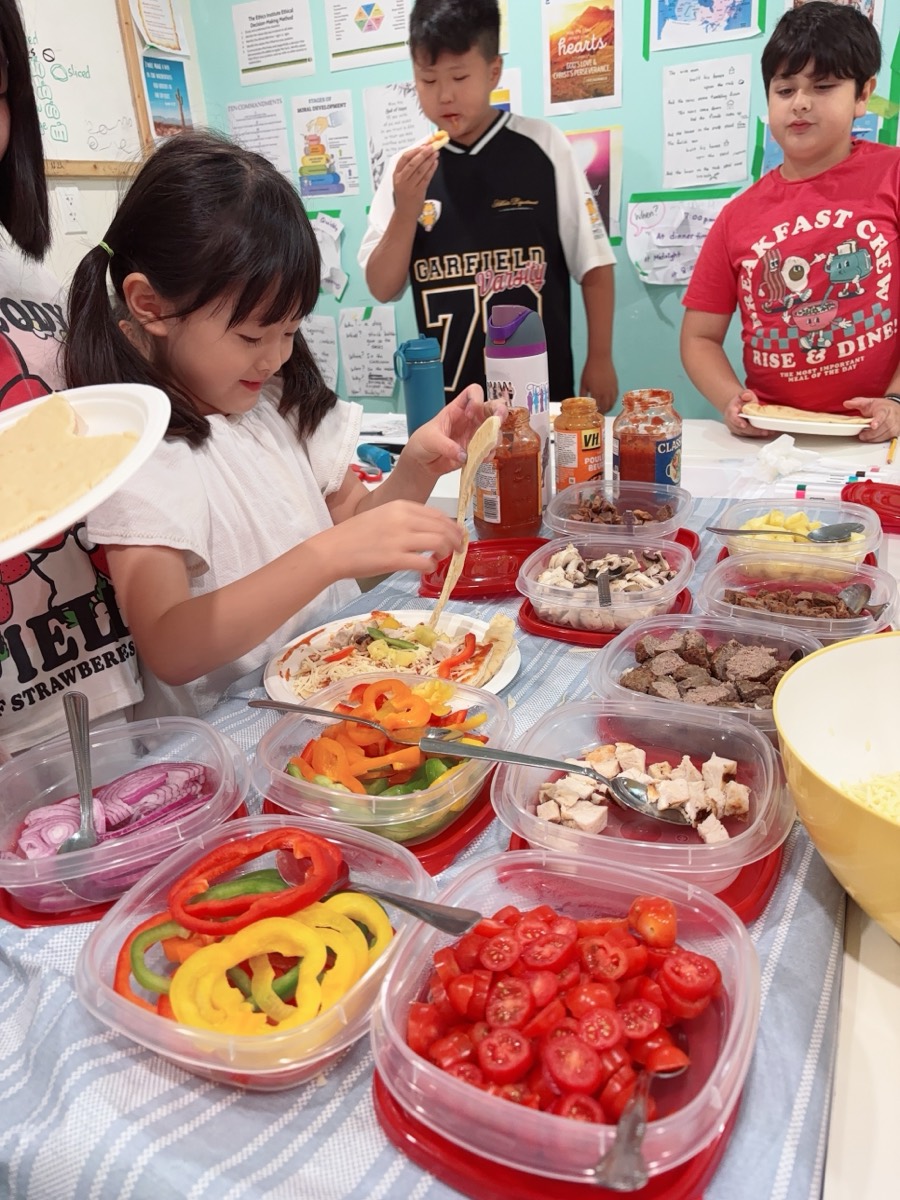
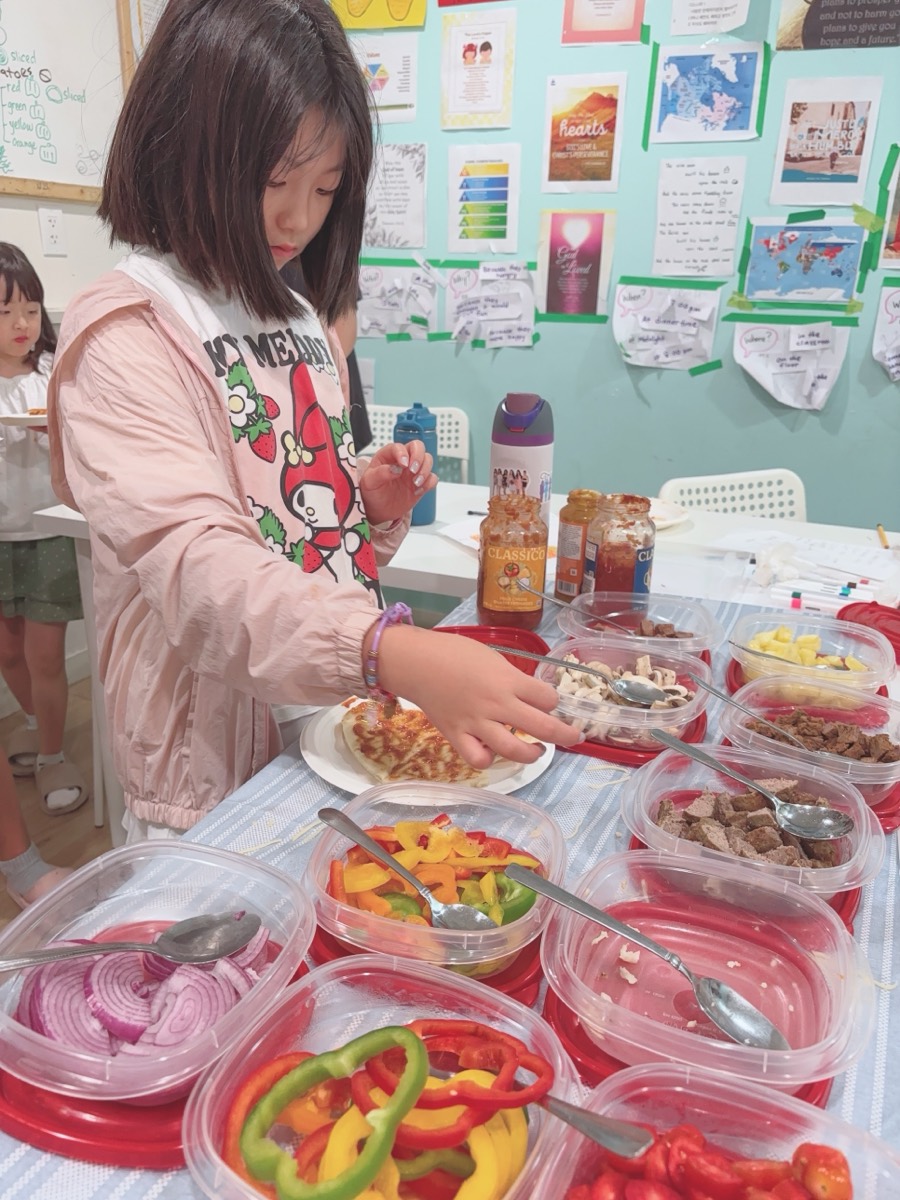
Then the table was set out: bowls of peppers, onions, mushrooms, cherry tomatoes, chicken, beef and meatballs, a bowl of grated cheese, and a stack of flatbread bases waiting for their sauce.
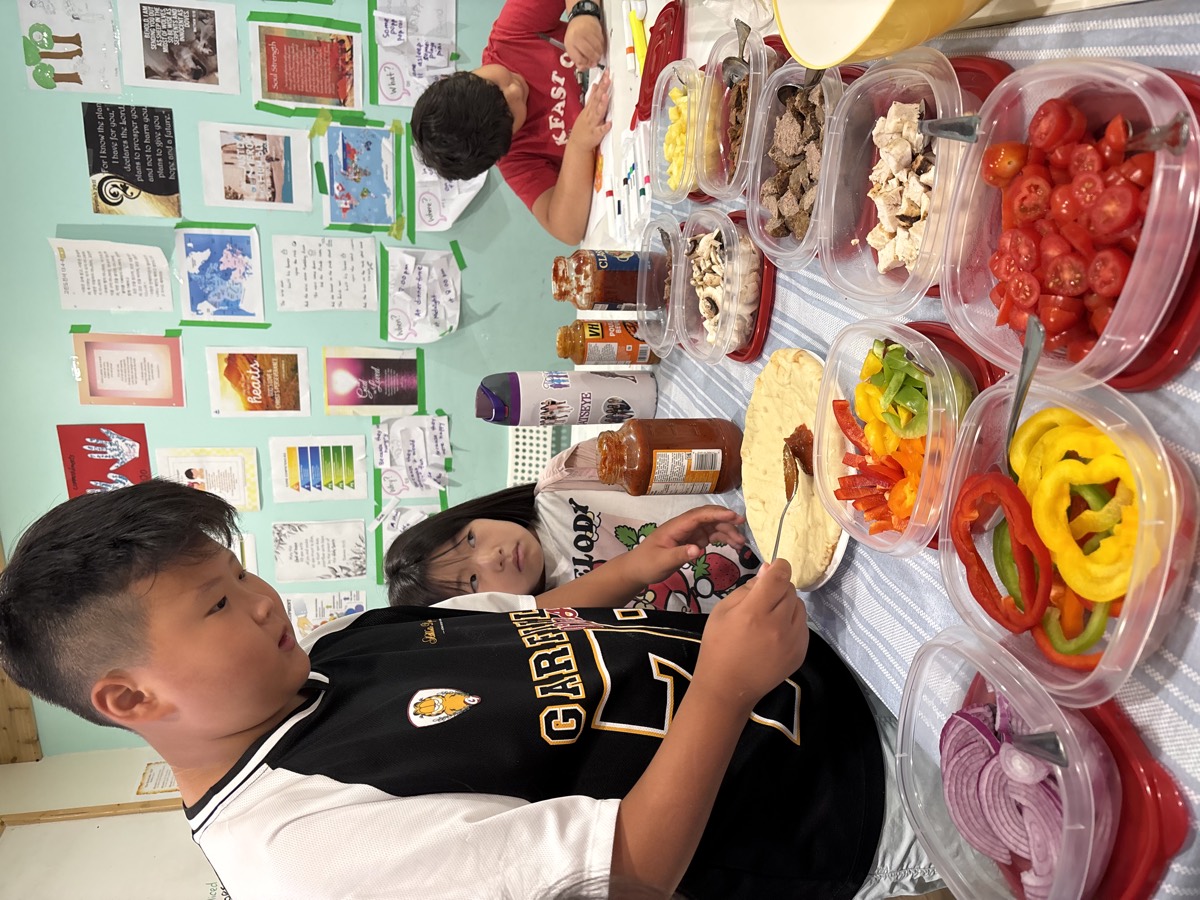
- Sauce — spread the tomato sauce evenly, right to the edge.
- Toppings — follow your own design and add what you planned.
- Cheese — scatter the grated mozzarella over the top.
- Bake — then wait, which is by far the hardest step.
😋 Out of the Oven No two the same
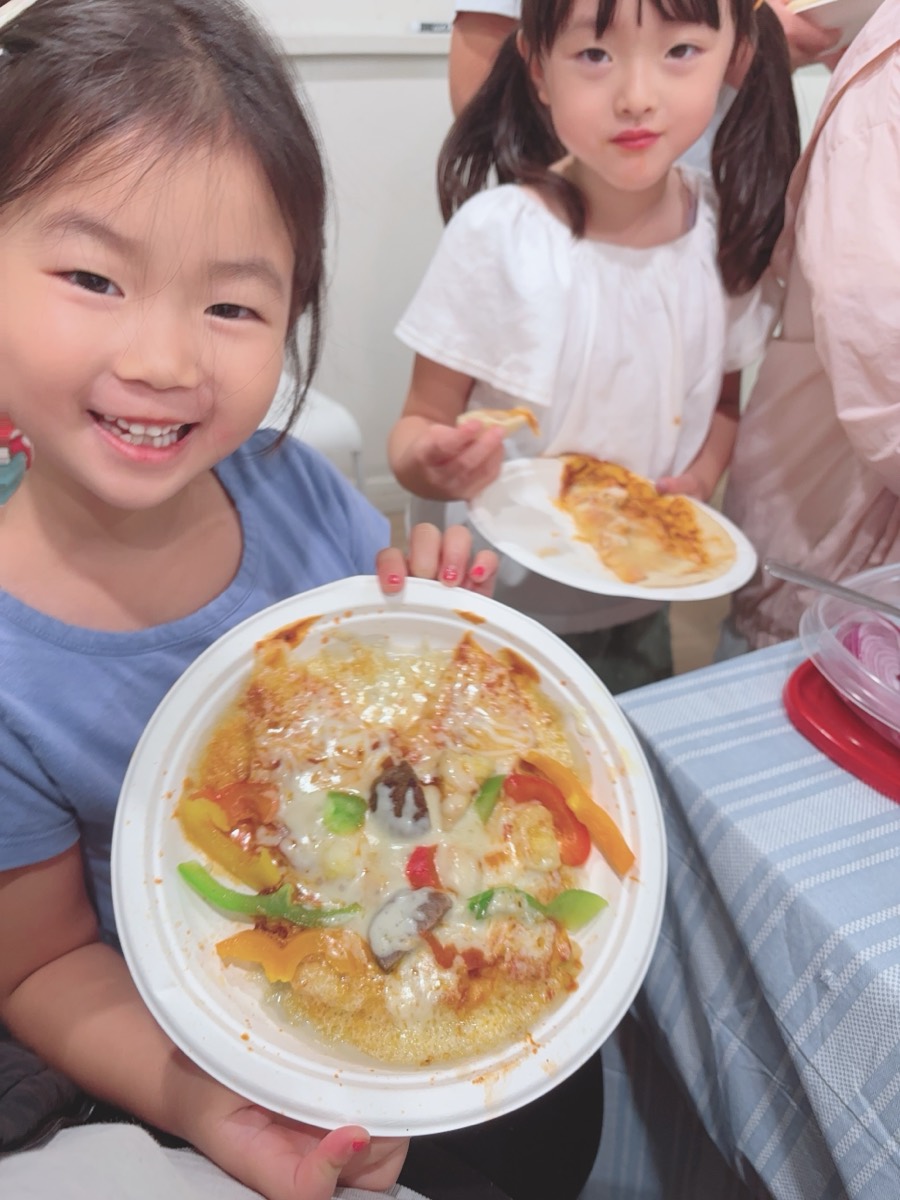
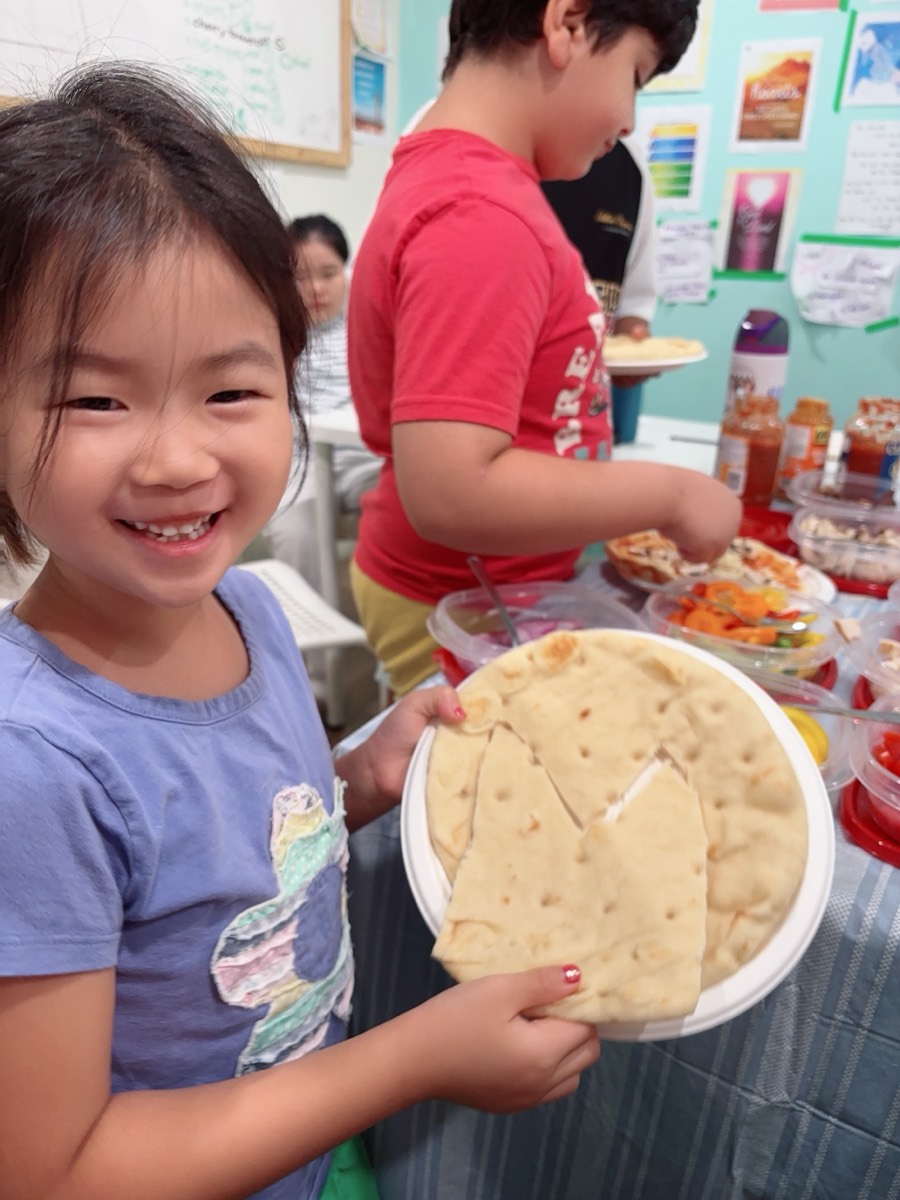
And here they are. Same table, same ingredients, same four steps — and not one pizza looked like anybody else’s. Some were loaded to the edges, some were carefully arranged in rings, some were an enthusiastic pile of cheese. Every single one was held up to the camera with real pride.
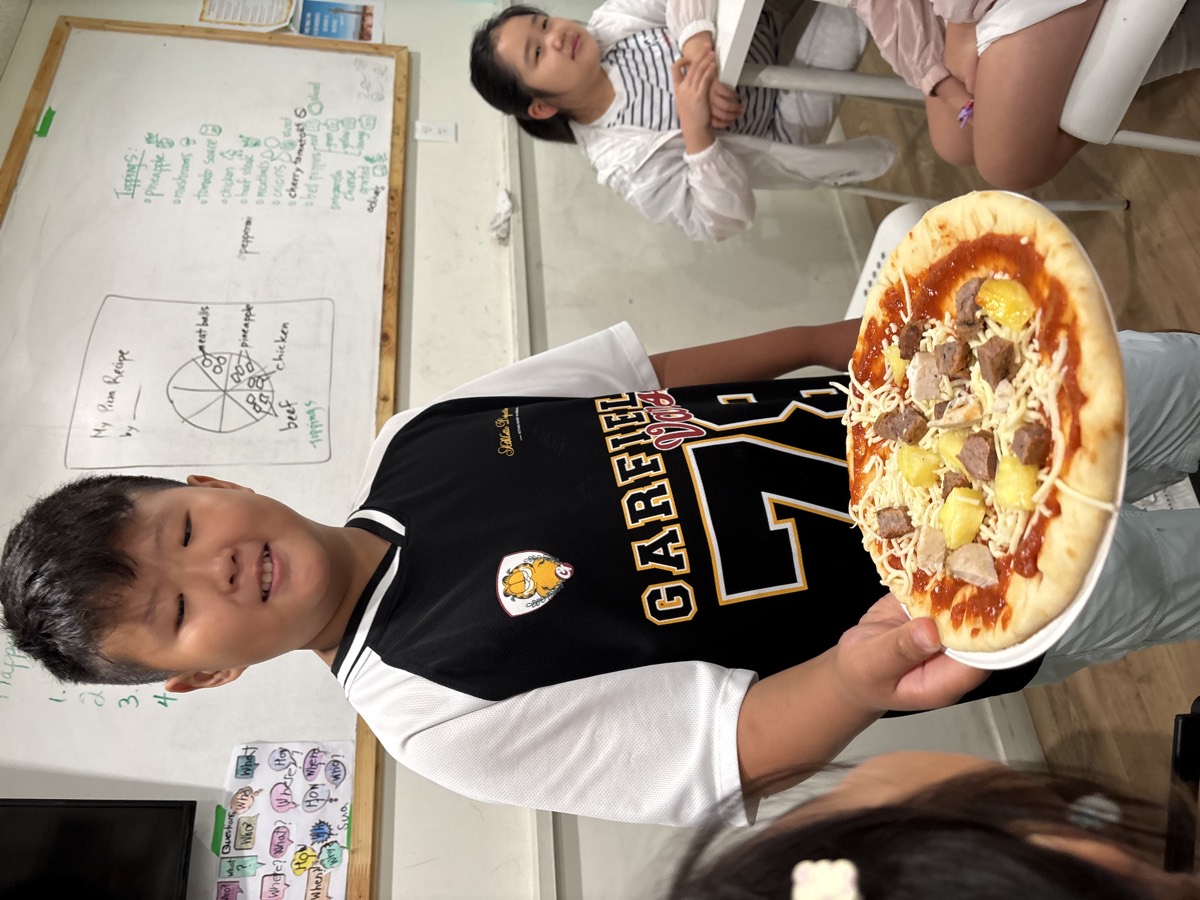
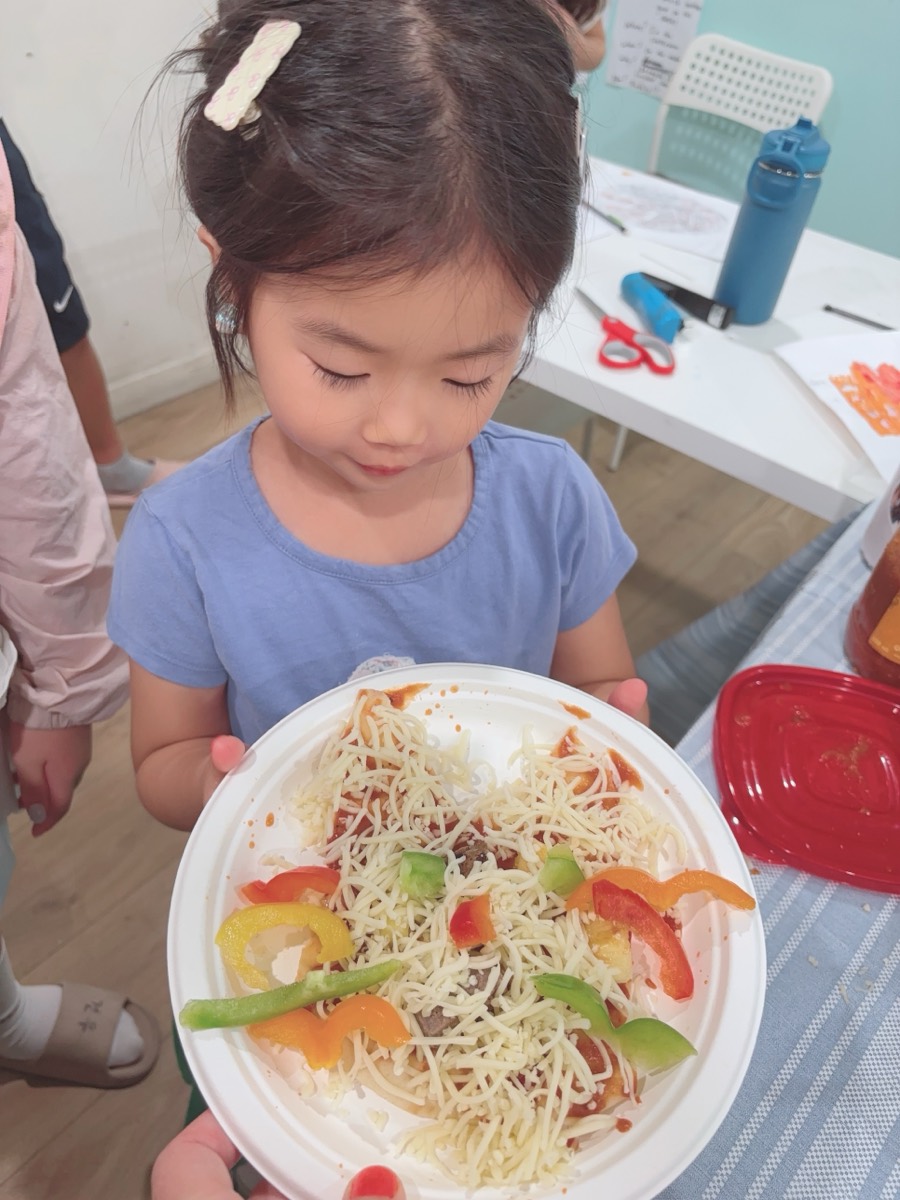
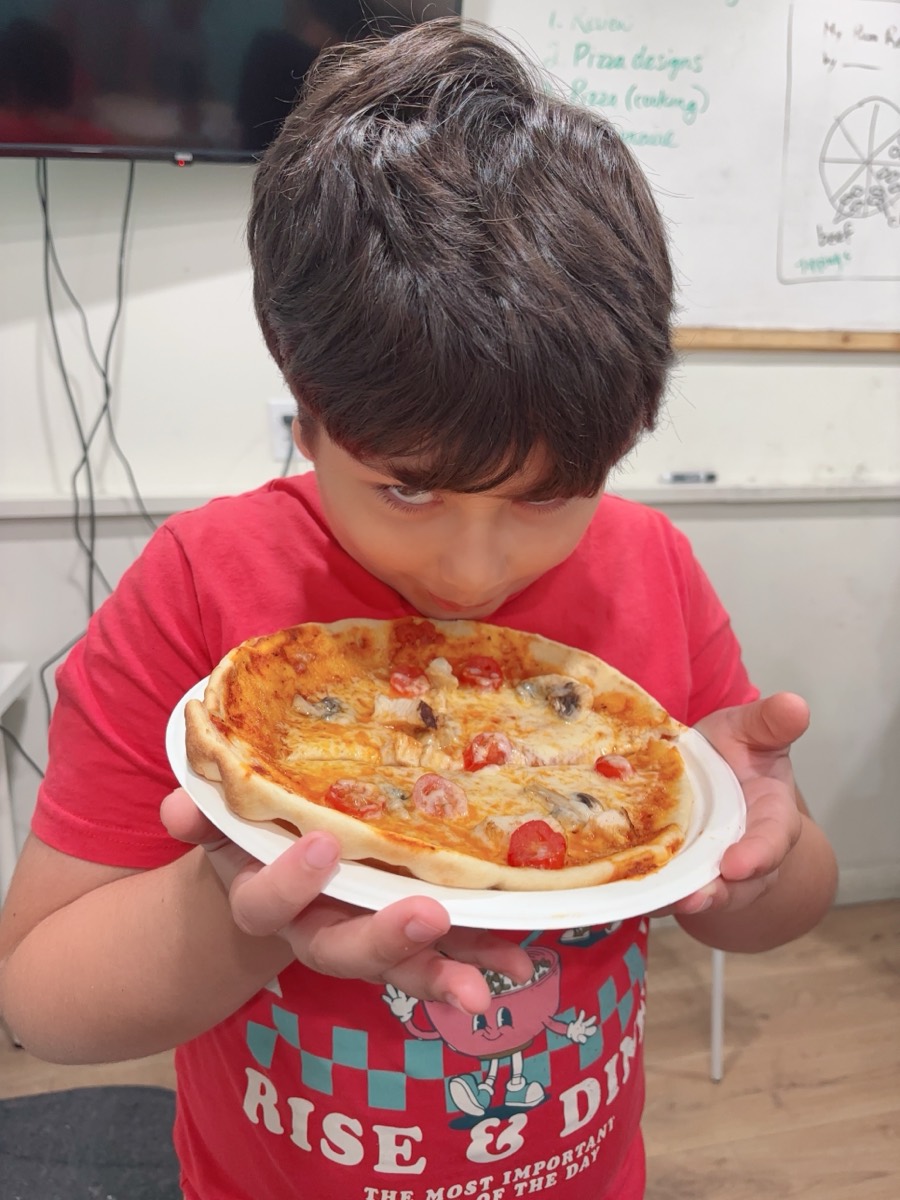
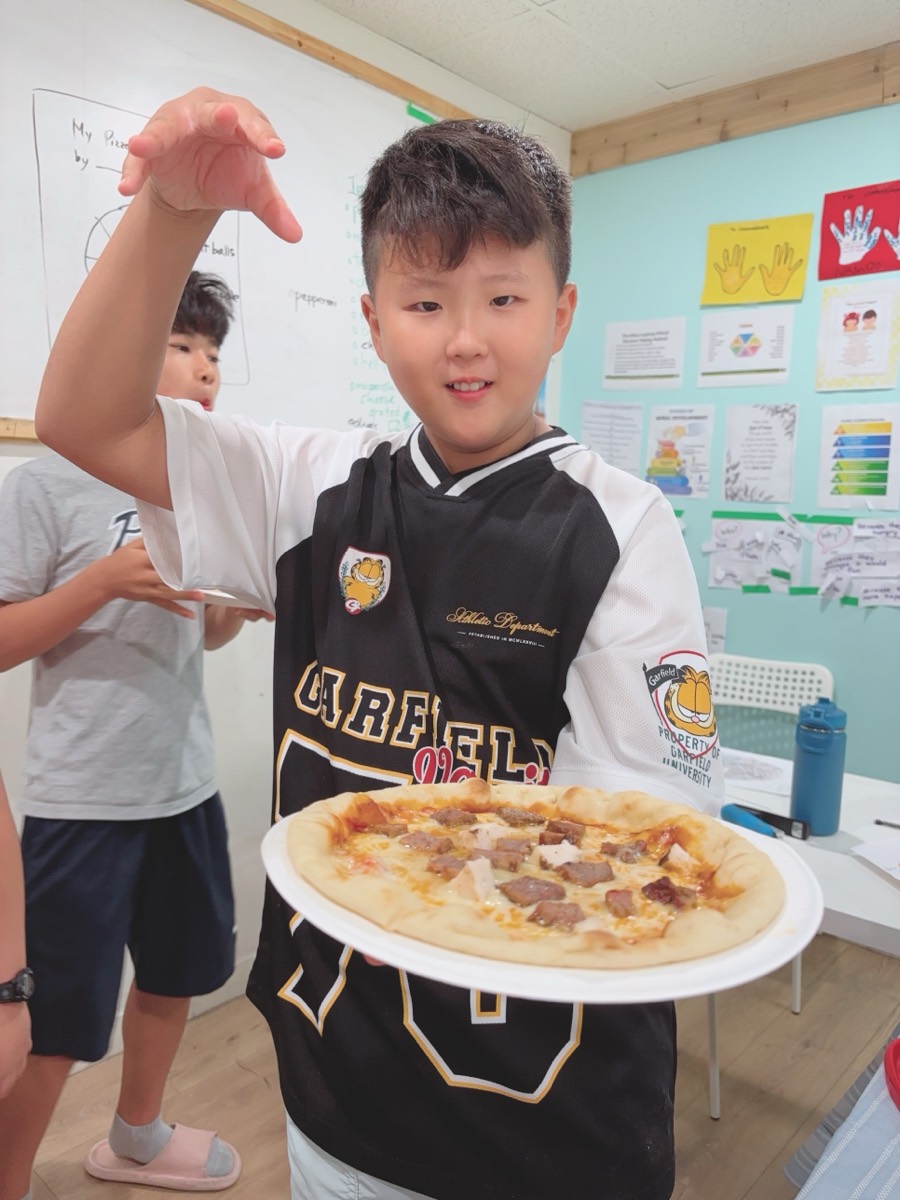
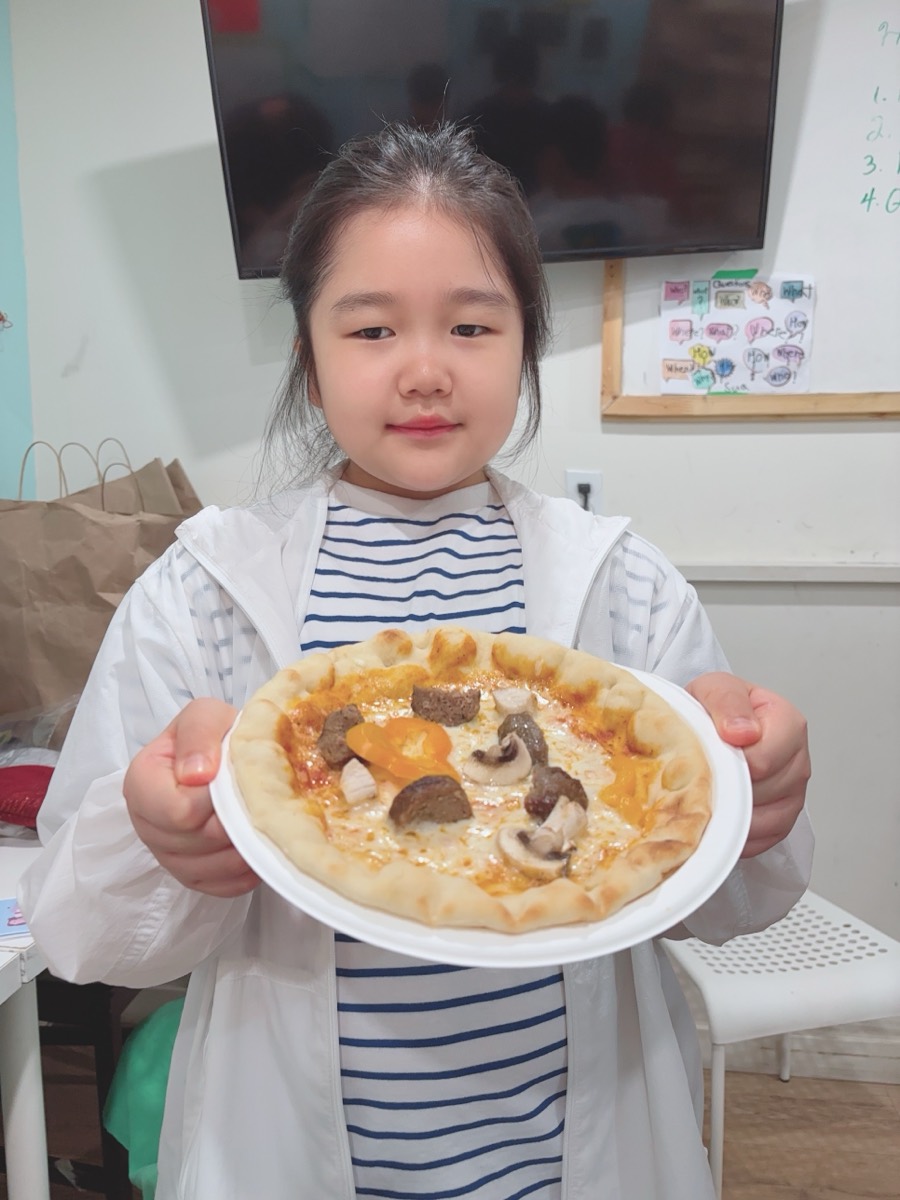
“The students brought a lot of positive energy to today’s class. It is such a delight to teach such an enthusiastic and eager group of students.” ❤️
🍚 Lunch and Outdoors Refuel · walk · swim
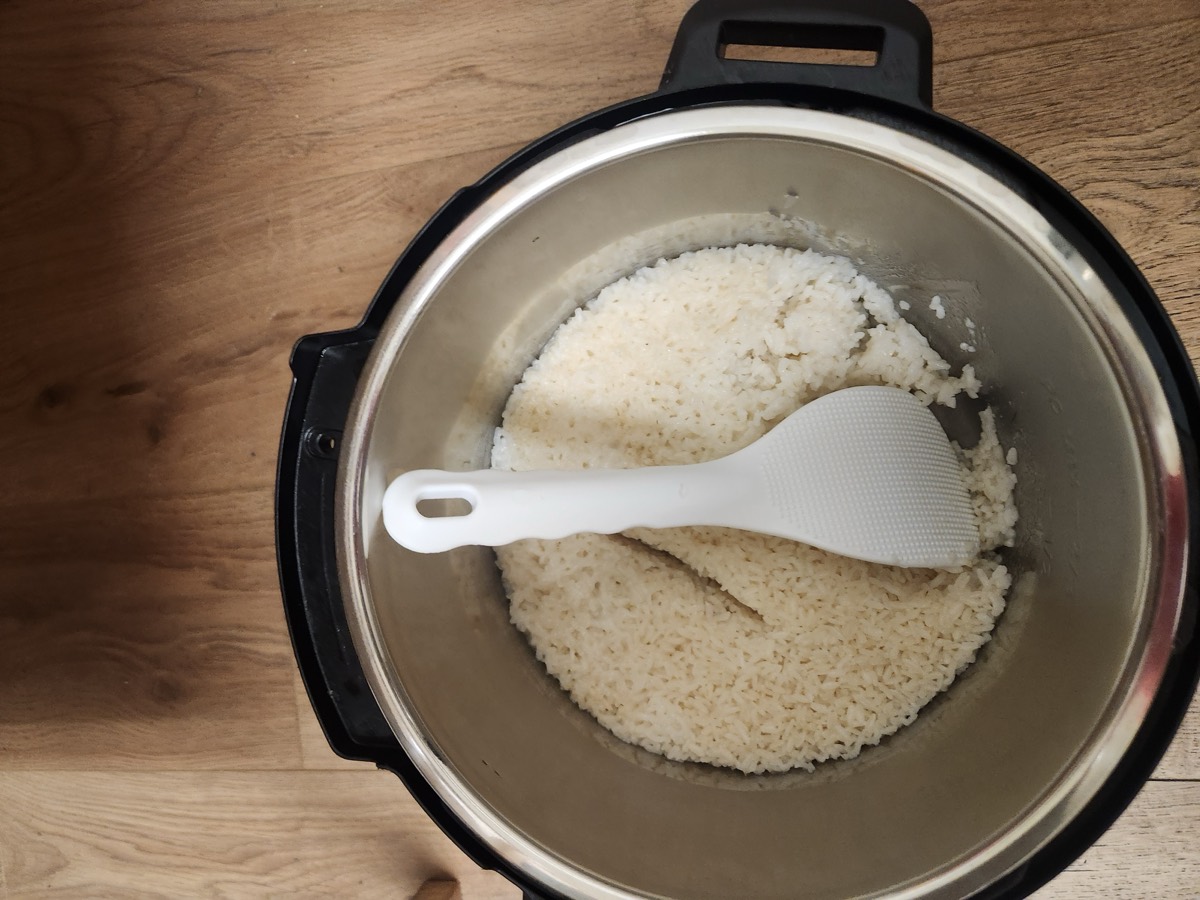
A warm Korean lunch came earlier in the day — a big pot of braised chicken with potatoes, freshly cut kimchi and a cooker full of rice. Proper fuel for a day of grating, spreading and baking.
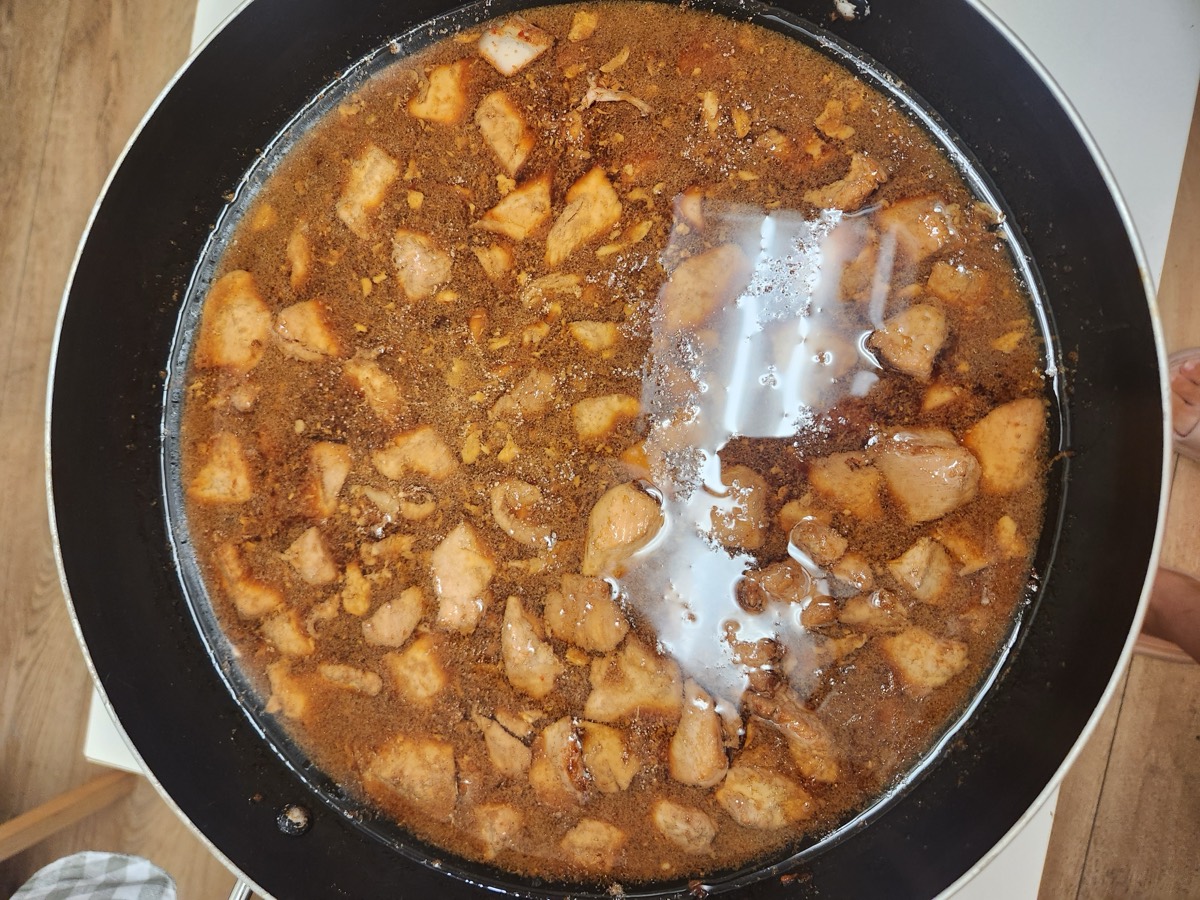
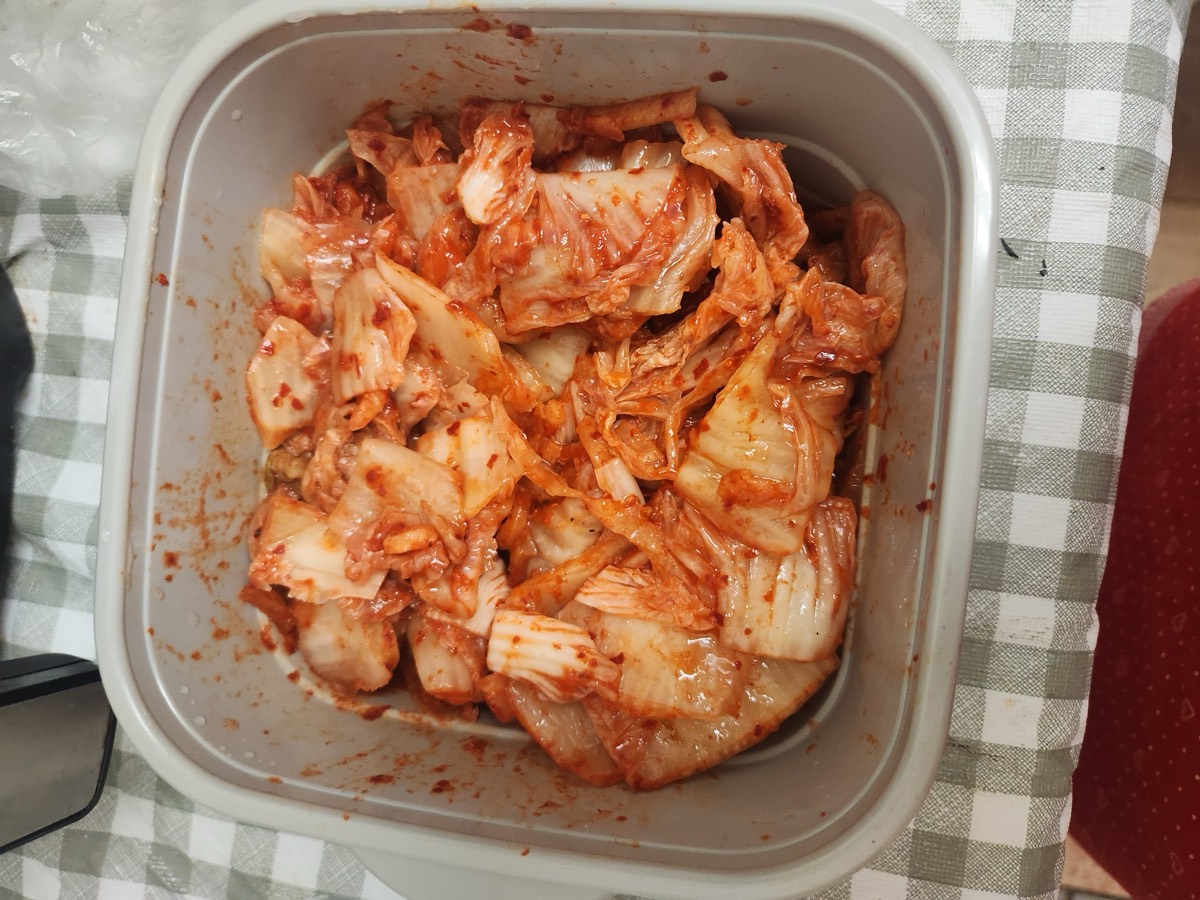
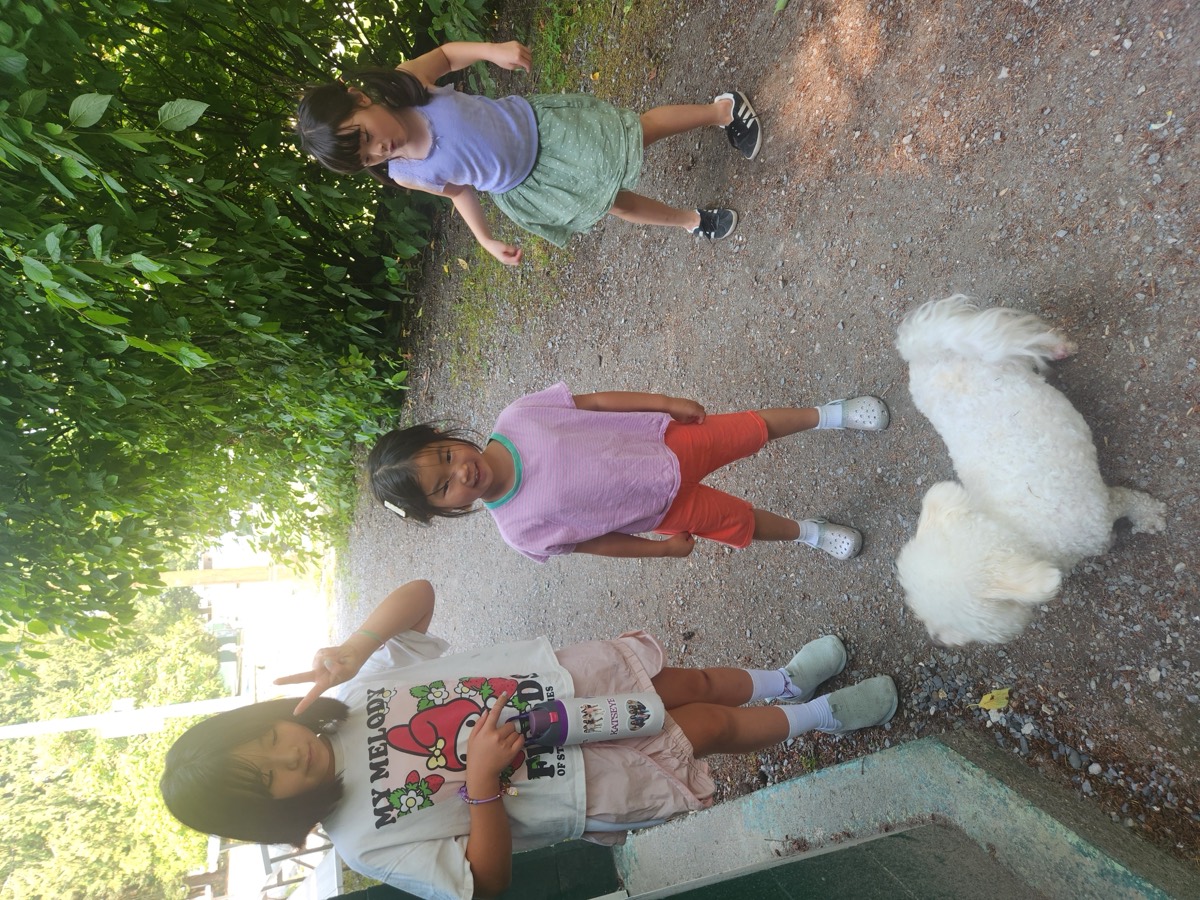
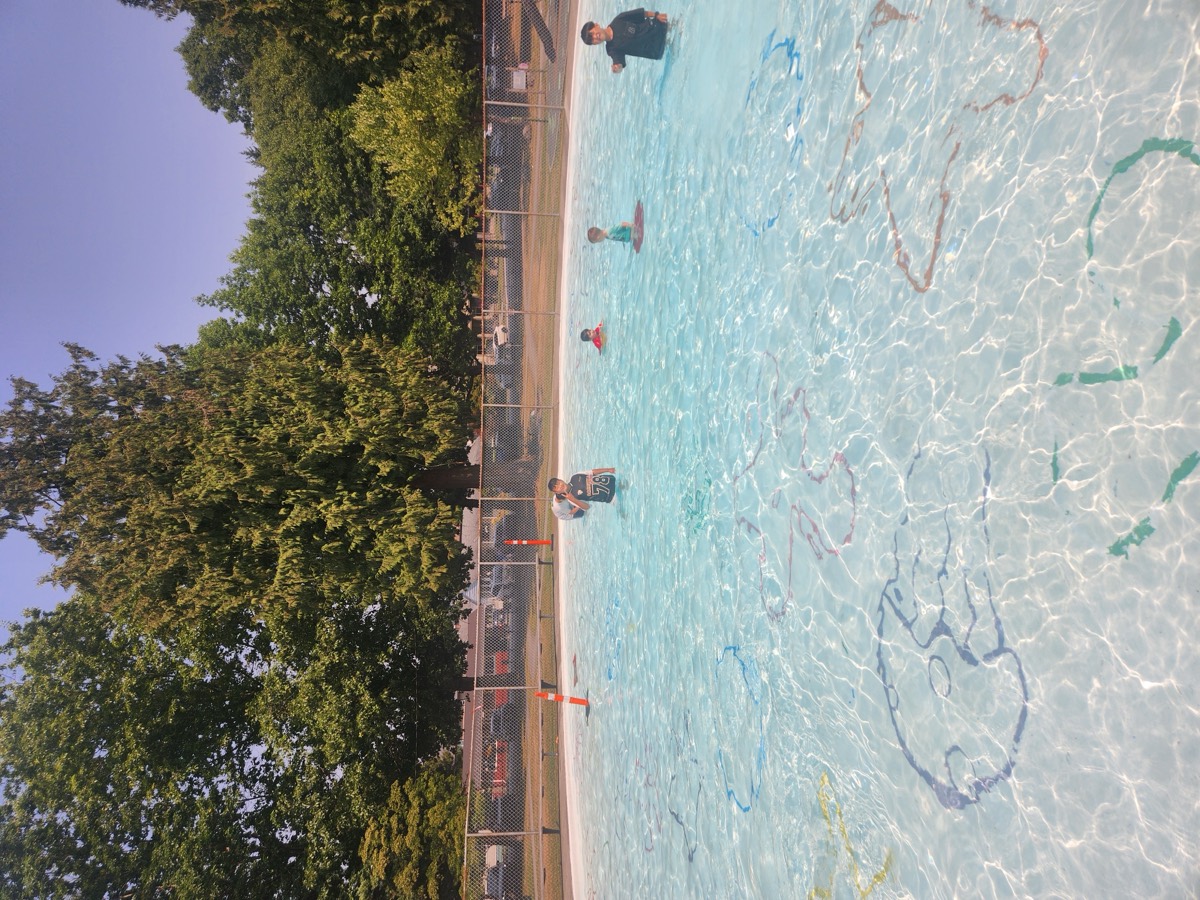
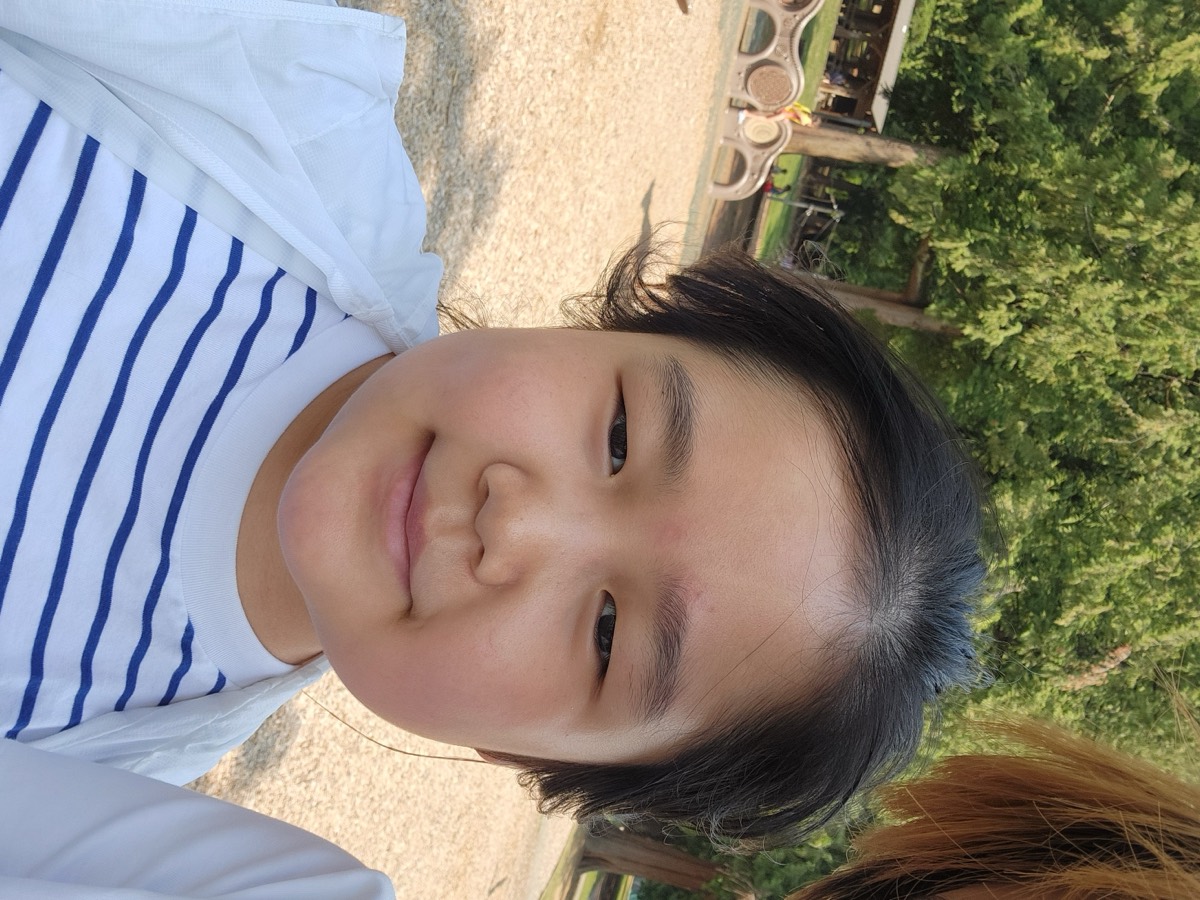
We were outside too. A walk along the shaded path with a very small dog supervising, and then the pool — the best possible answer to a hot August afternoon.
Today’s Growth
Students learned the vocabulary and the mechanism behind the three states of water — evaporation, condensation, solidification, and why a snowflake always has six points. Then they turned a written plan into a real result in the kitchen: reading a list, preparing ingredients safely, following steps in order, and taking pride in something they made entirely themselves.
Ask them tonight what happens to water when you heat it up — and then ask what they put on their pizza. You will get a detailed answer to both. 🍕