오늘은 화학자 🌋
용암램프를 만들었습니다
Happy Tuesday ☀️ The morning belonged to math, the afternoon to chemistry — and somewhere in the middle, a lot of blueberries.
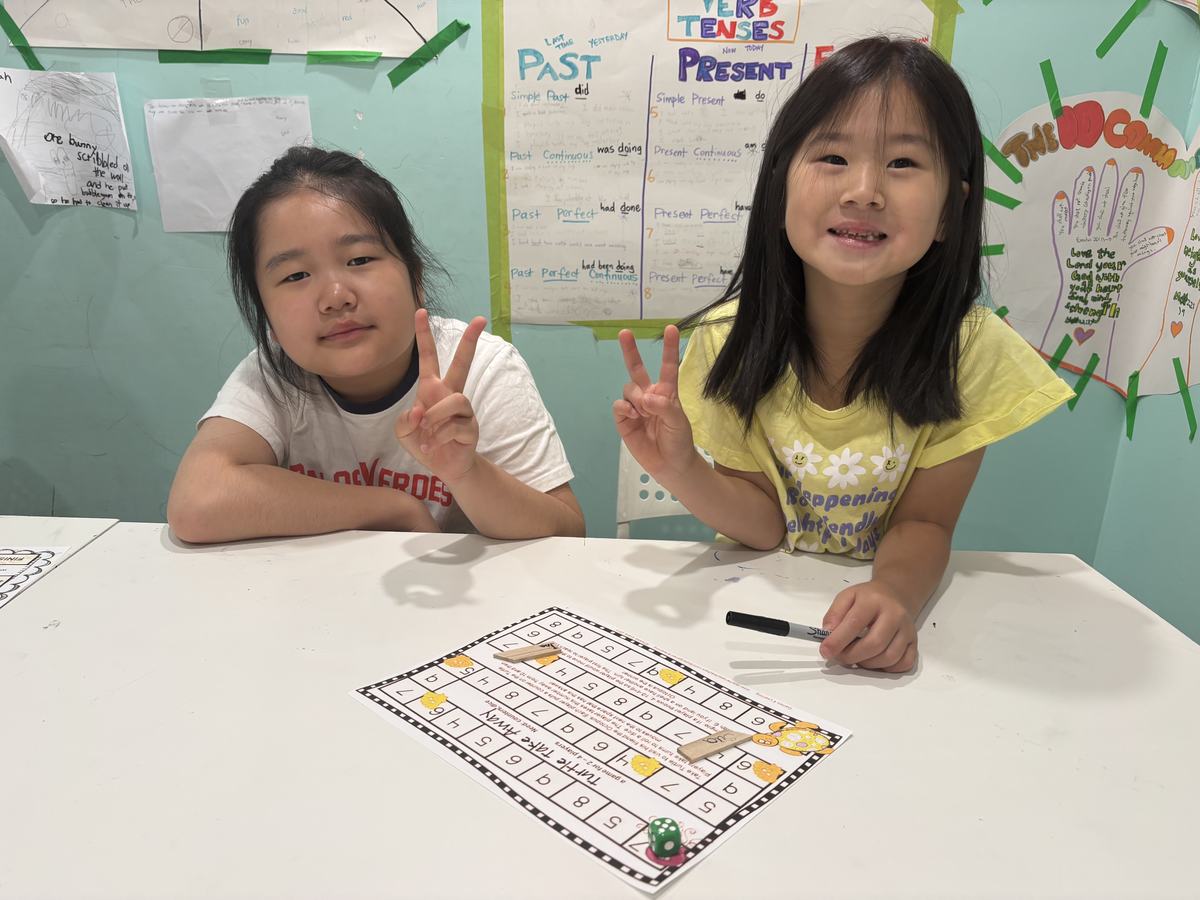
🎲 Math, Around a Board Together and alone
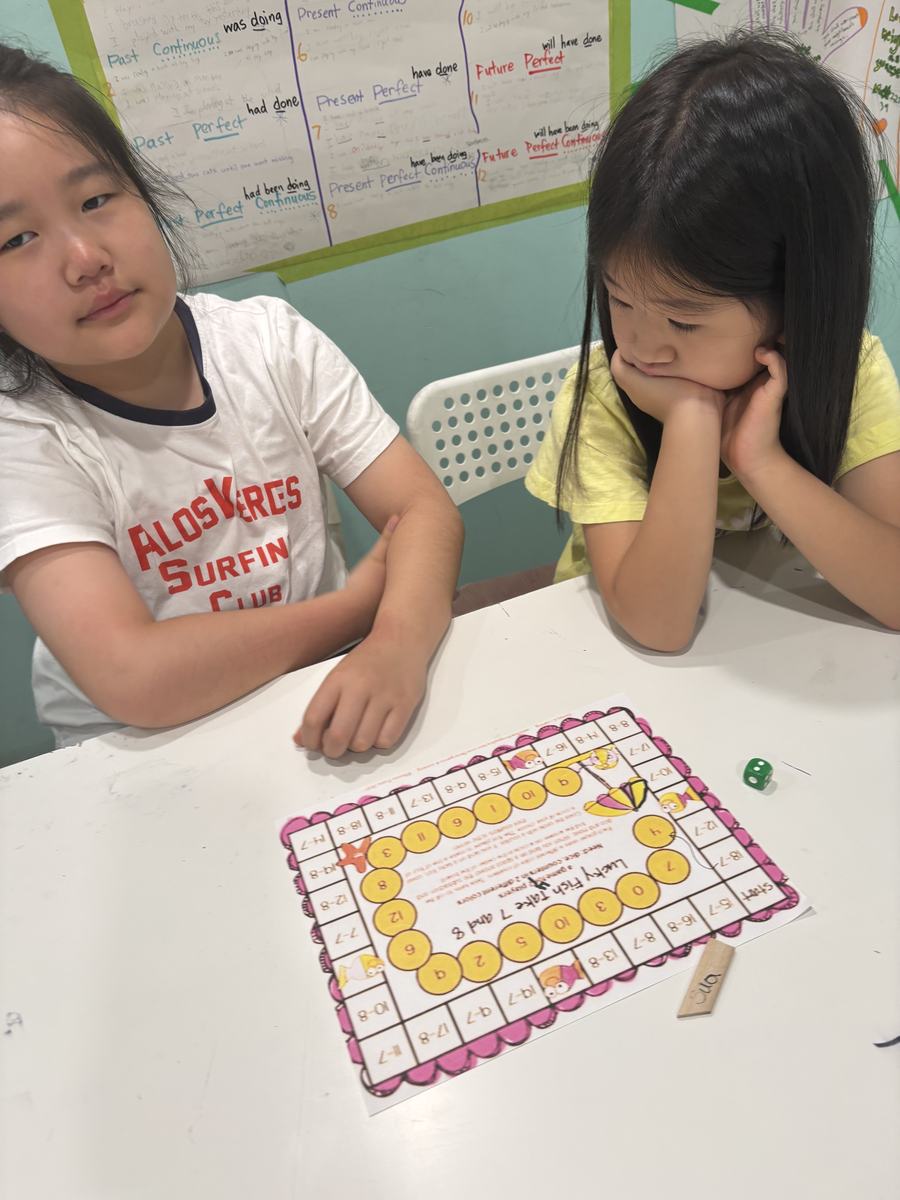
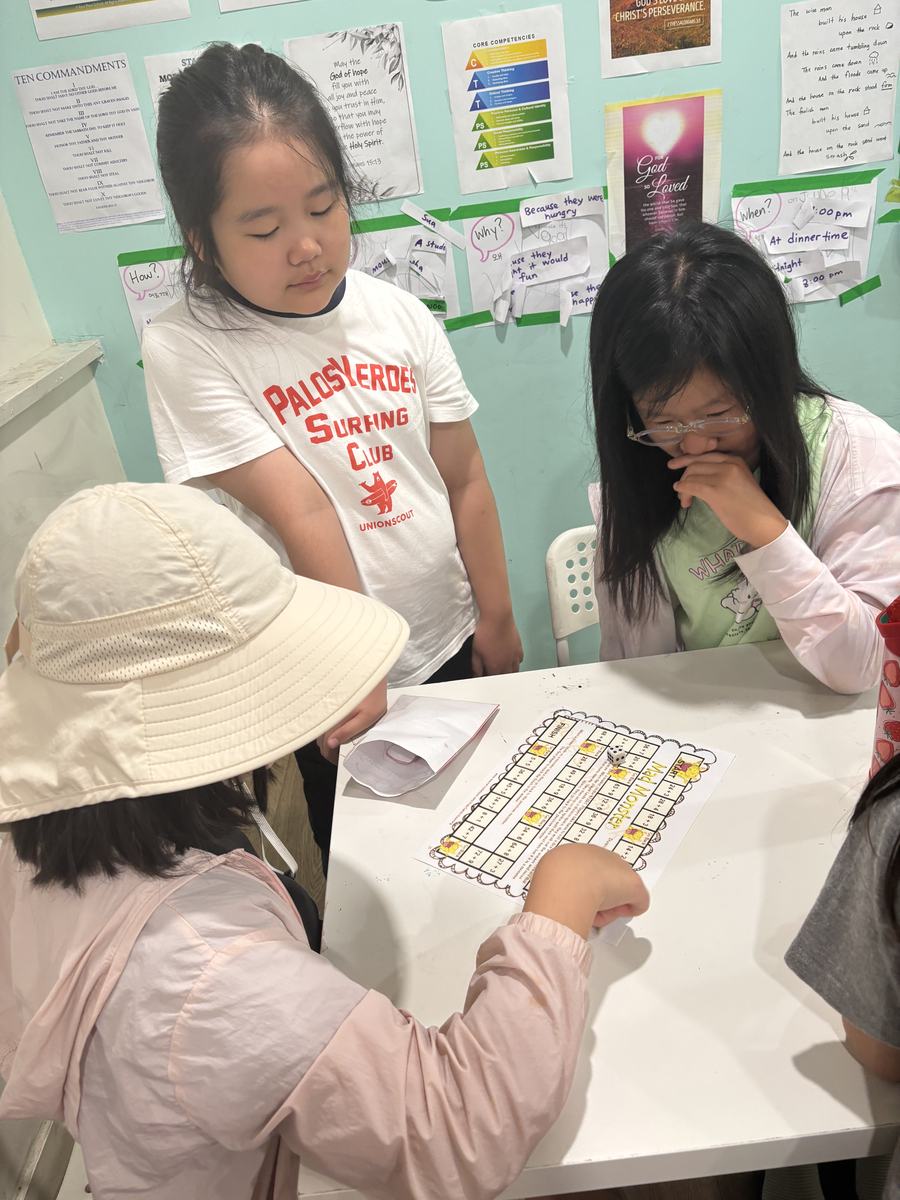
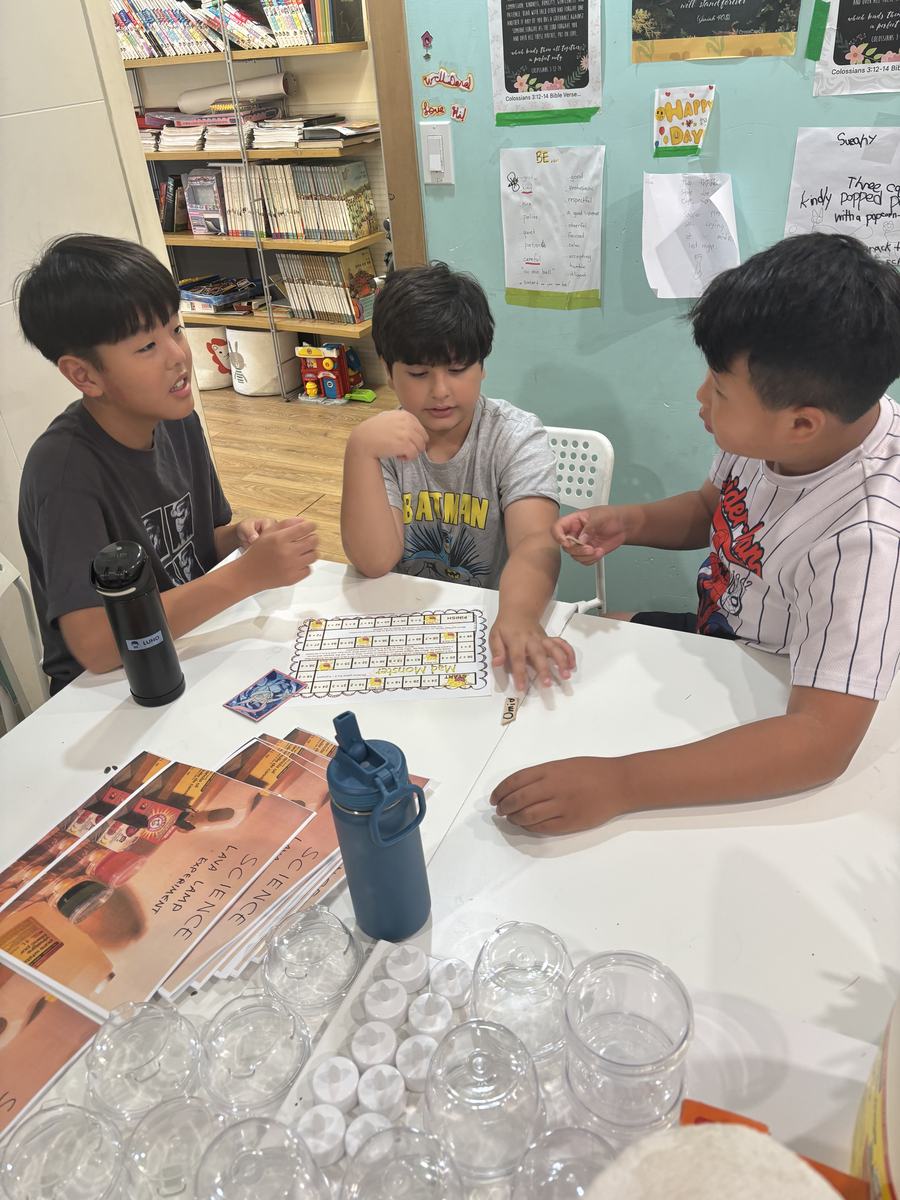
For the first part of the morning the students worked through a variety of practice math equations — some together, some on their own — while competing to make their way around a set of math board games. Roll, solve, move. Get it wrong and you stay where you are.
Then it was blueberries 🫐 for snack, and while everyone ate, the tables were reset for the experiment.
🌋 Making a Lava Lamp Kid-safe chemistry
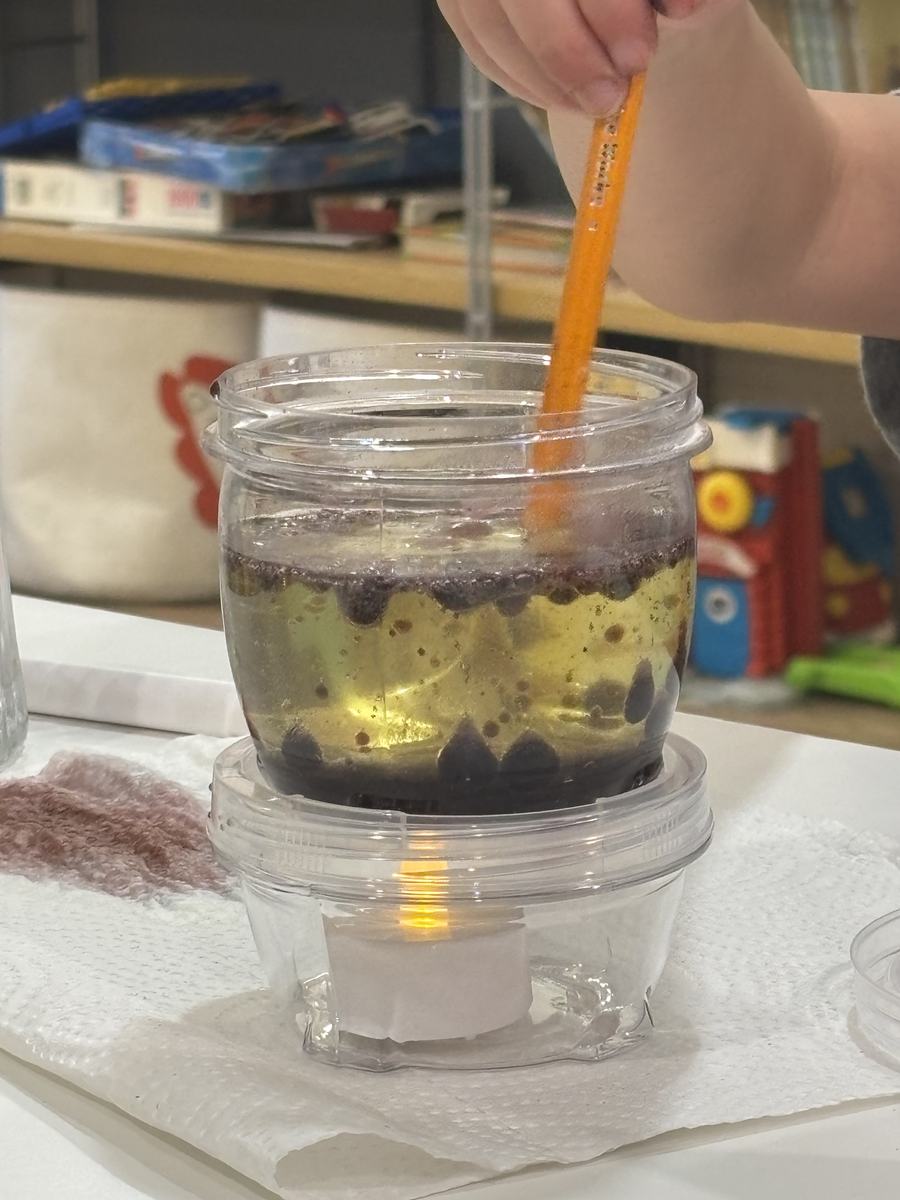
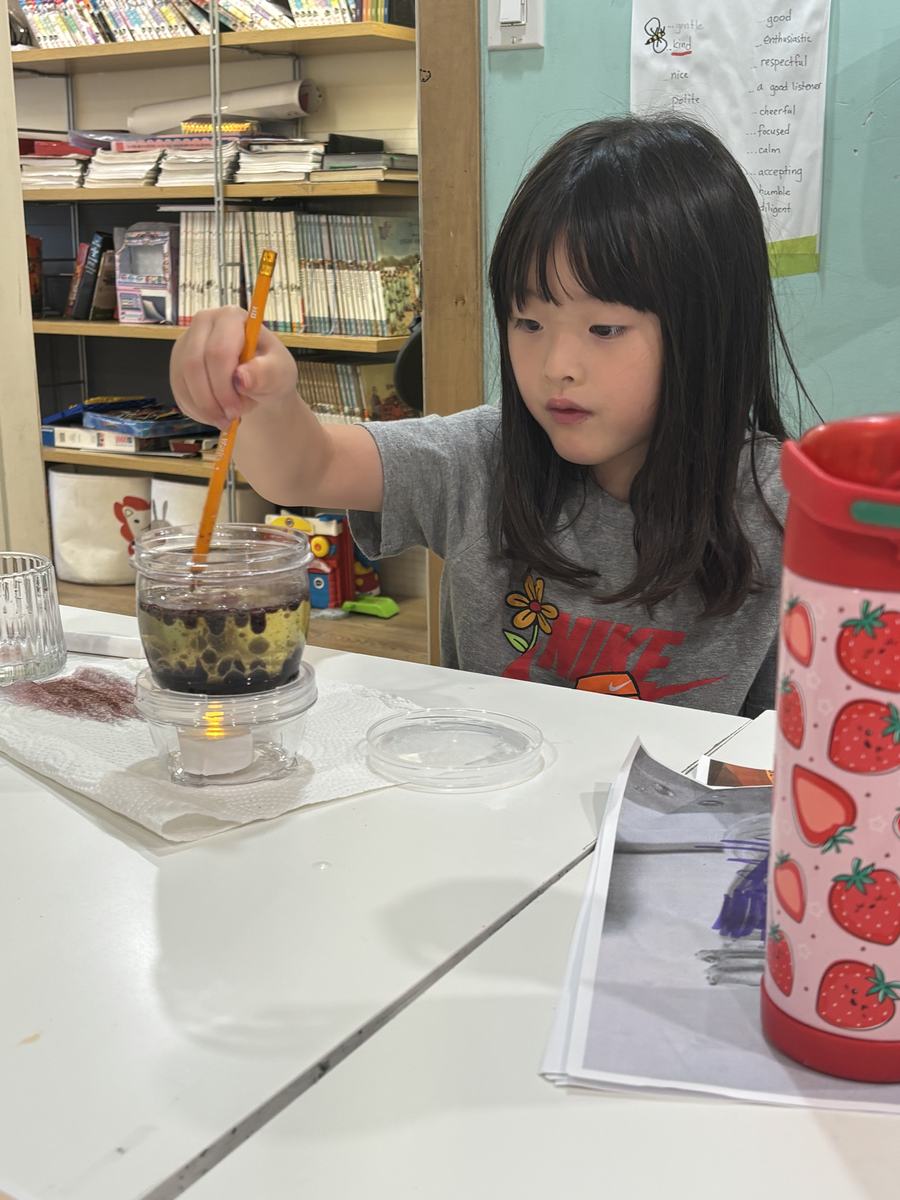
The trick to this experiment is suppressing a reaction rather than letting it run free. Baking soda and vinegar are put together under half a cup of canola oil — and because oil and water do not mix, the reaction has to happen underneath, and the gas it makes has to travel up through the oil to escape.
- Oil on top — about half a cup of canola oil poured over the water layer.
- Colour it — a few drops of food colouring, which stays with the water, not the oil.
- Baking soda and vinegar — dropped in underneath, where the reaction is held down by the oil above.
- Light it from below — a battery tea light in a clear container attached under the jar.
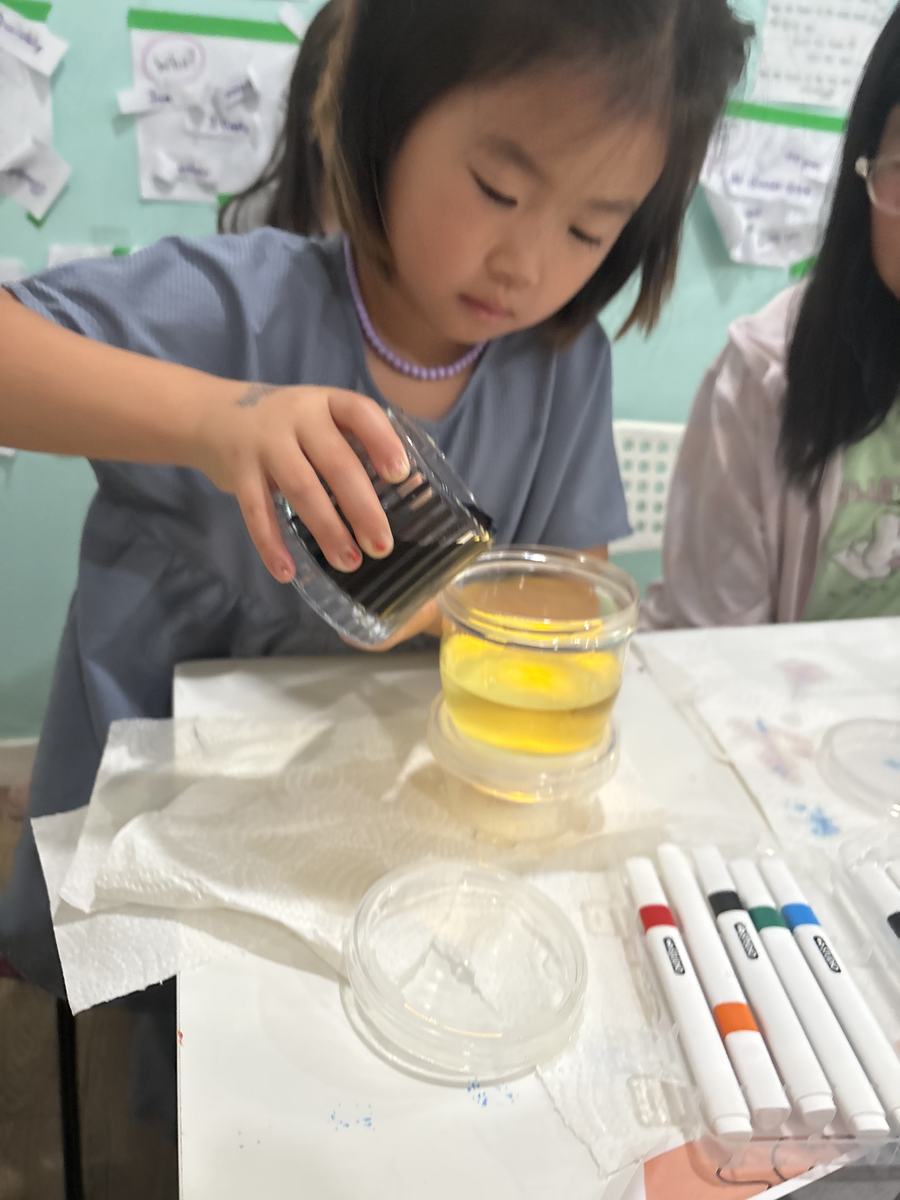
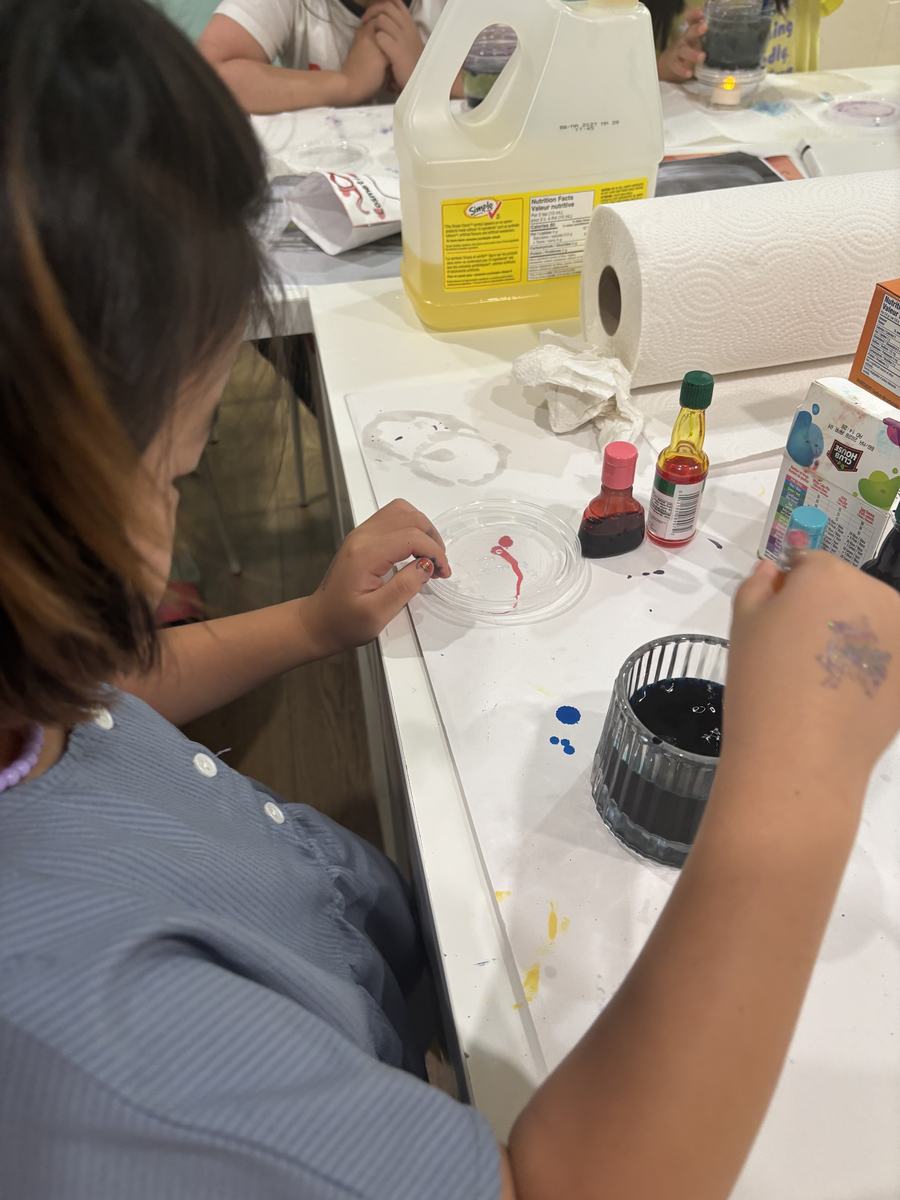
Then it starts. The carbon dioxide produced by the reaction cannot stay down there, so it comes up — blooping through the oil in exactly the slow, rolling way that wax moves in a real lava lamp. The children counted every shape of bubble they could find, and watched tornado-like swirls spiral up and break at the surface, releasing the gas into the air.
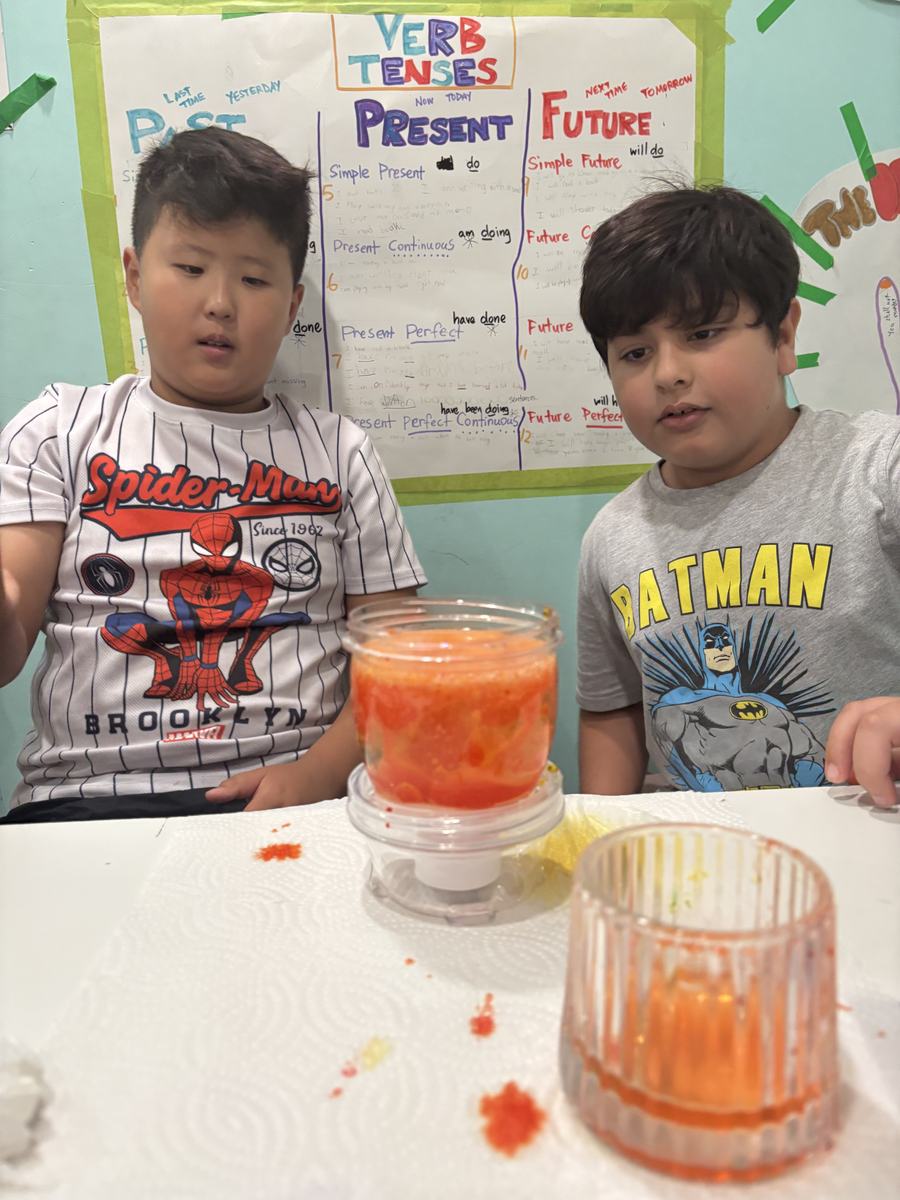
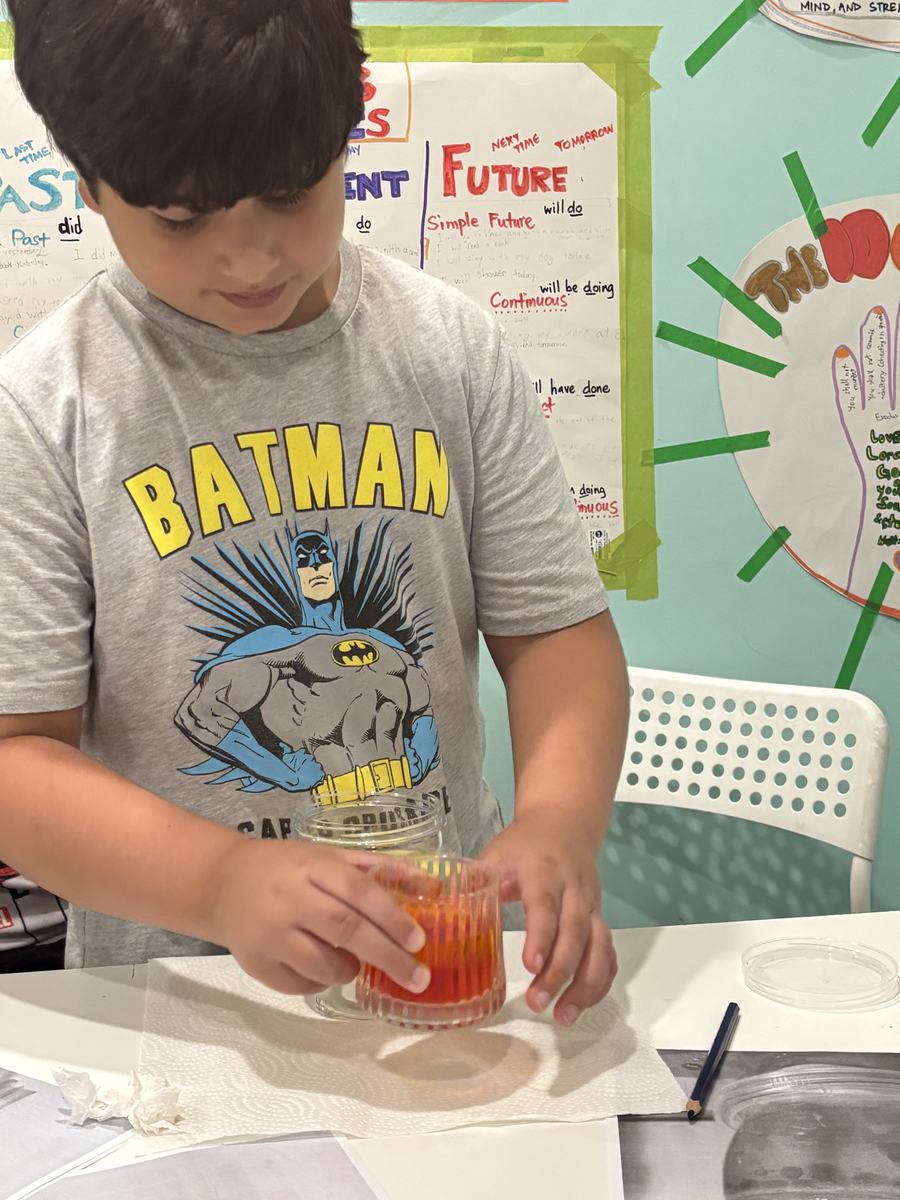
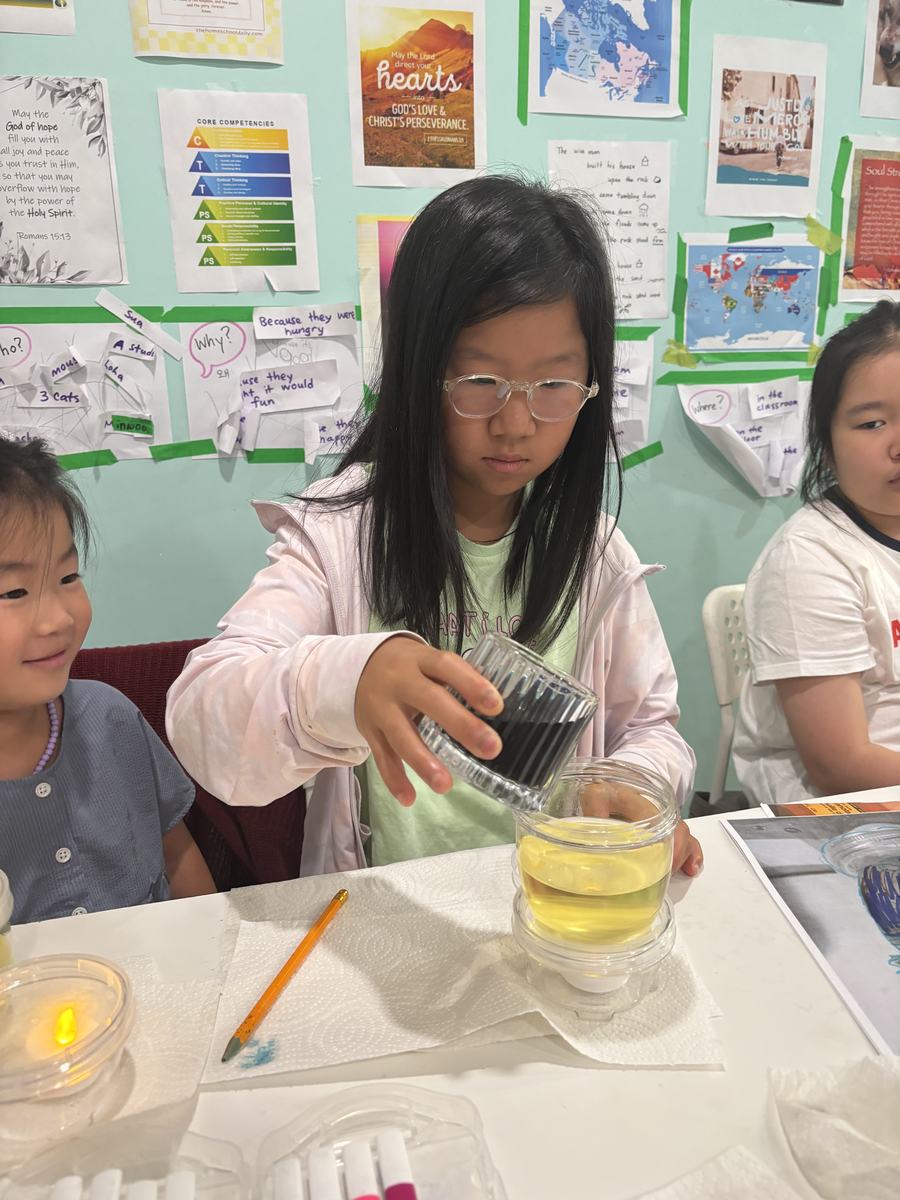
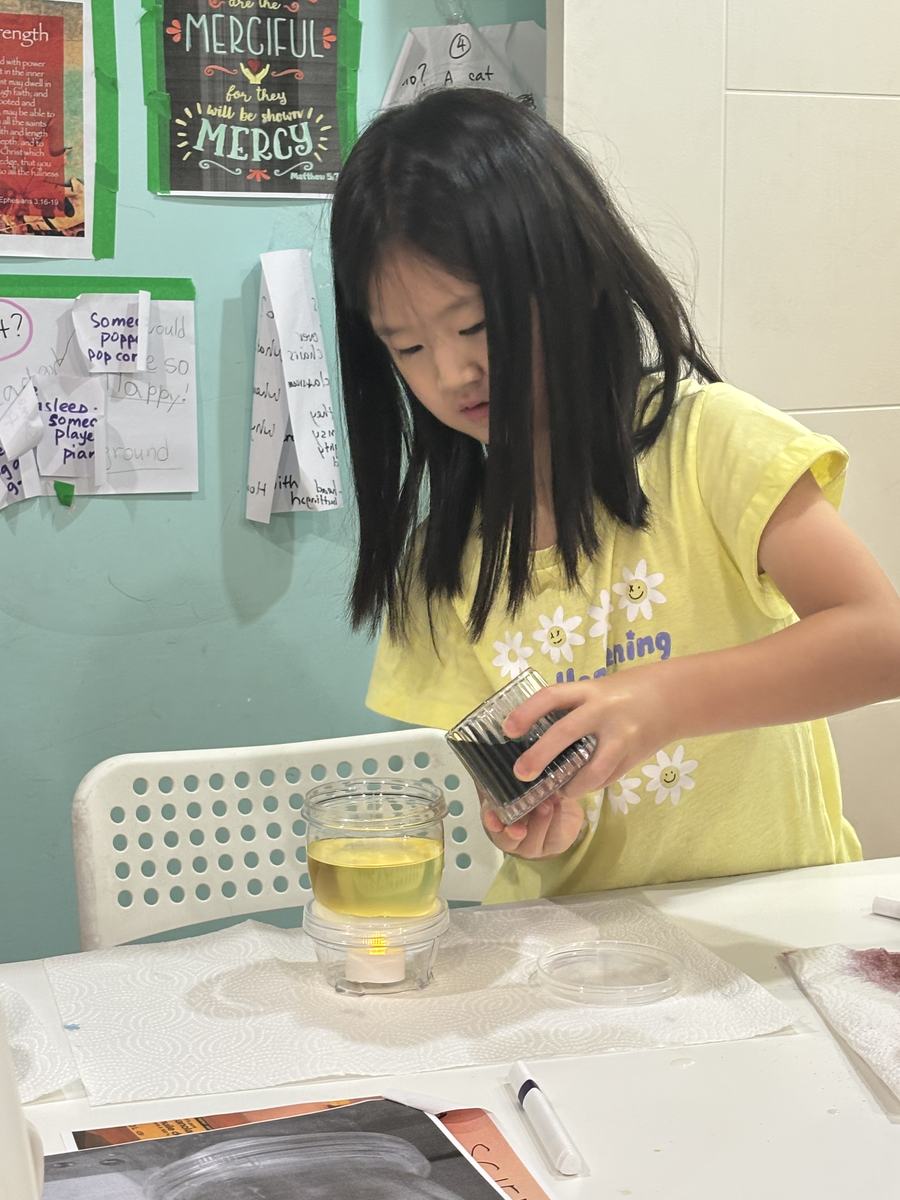
The tea light underneath is what turns a jar of chemistry into a lamp. Lit from below, the colour catches and the whole slow dance becomes something you want to sit and stare at.
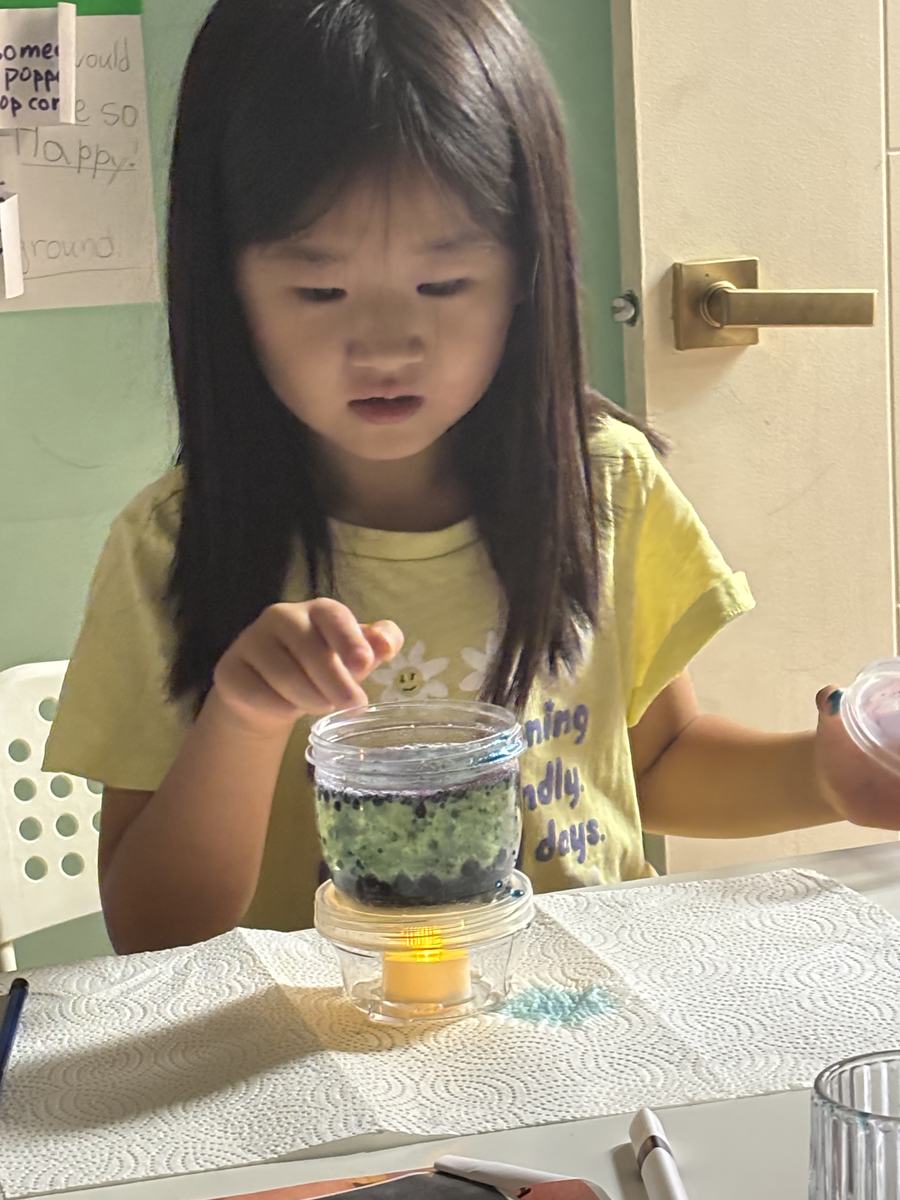
⚗️ And Then, the Chemistry Why it did that
Watching it is the hook. Explaining it is the lesson. Afterwards we went back over what actually happened chemically and connected it to the experiments we have already done this summer — the states of water, and the red cabbage pH indicator.
Then came a first look at the periodic table of the elements, where students found the basic chemicals of life that they had already met — some from earlier lessons, some they simply knew.
And the payoff: most students recalled H₂O — the water molecule from our states-of-water lesson — and CO₂, the very gas they had just spent an hour watching climb through oil. Two letters and a number stopped being a symbol on a board and became something they had seen with their own eyes.
“The food colouring made this whole dance-like, lava-like process appear like the moving wax in a real lava lamp when it gets heated.” ❤️
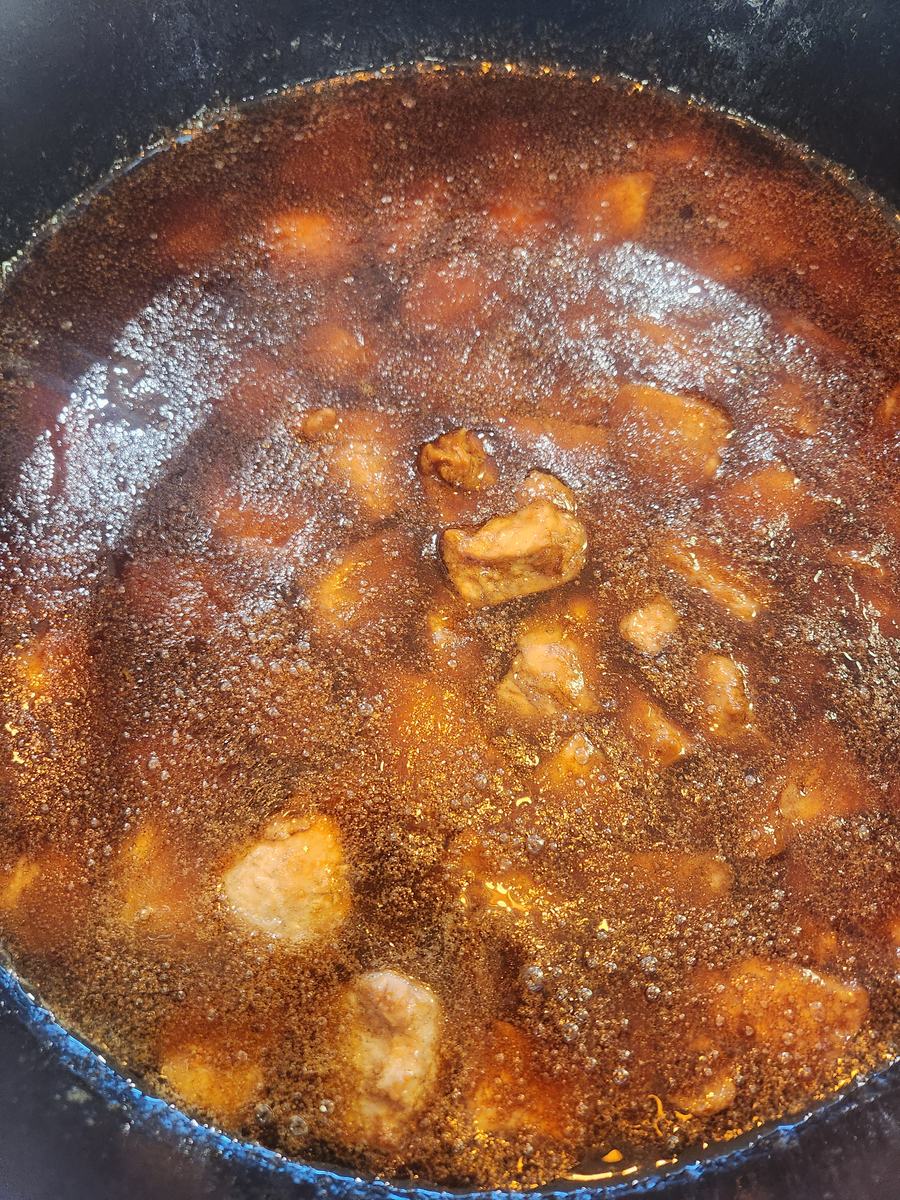
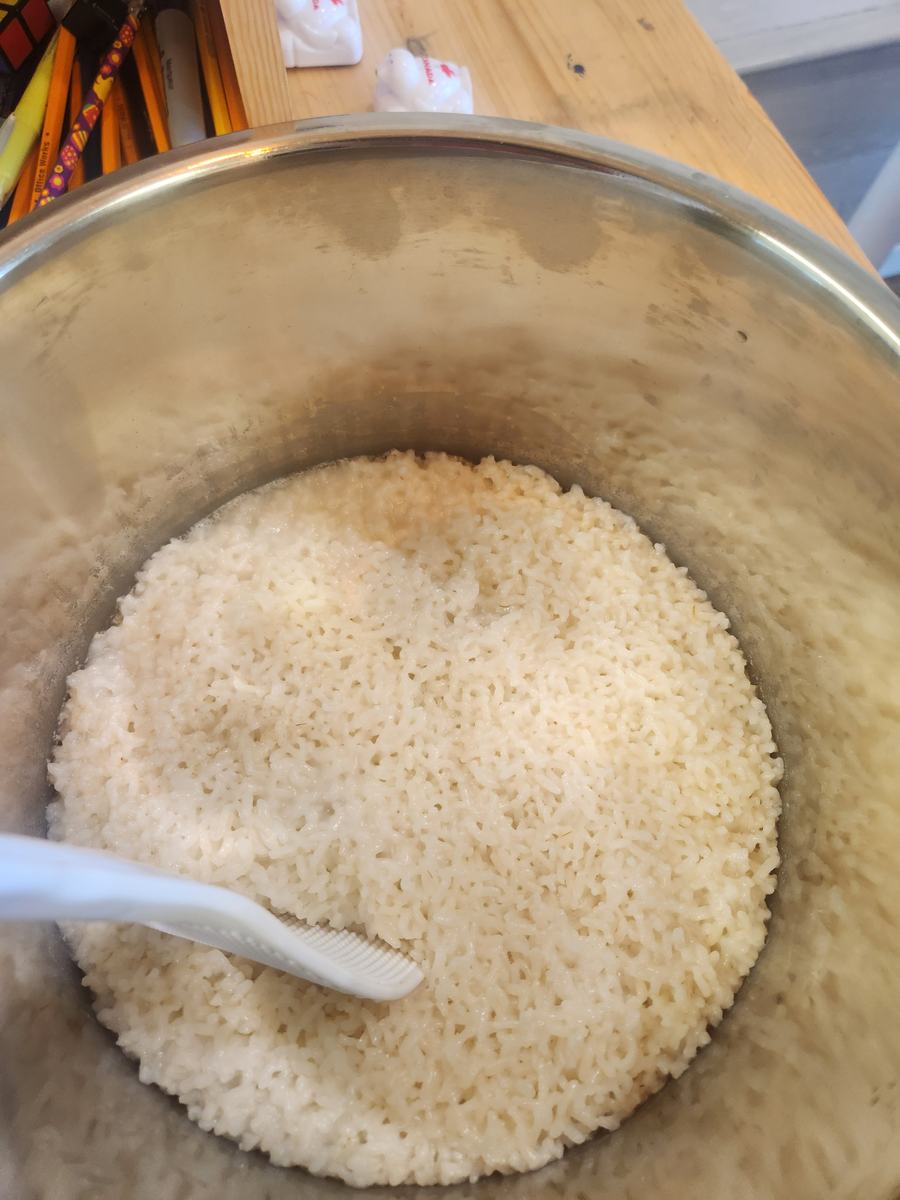
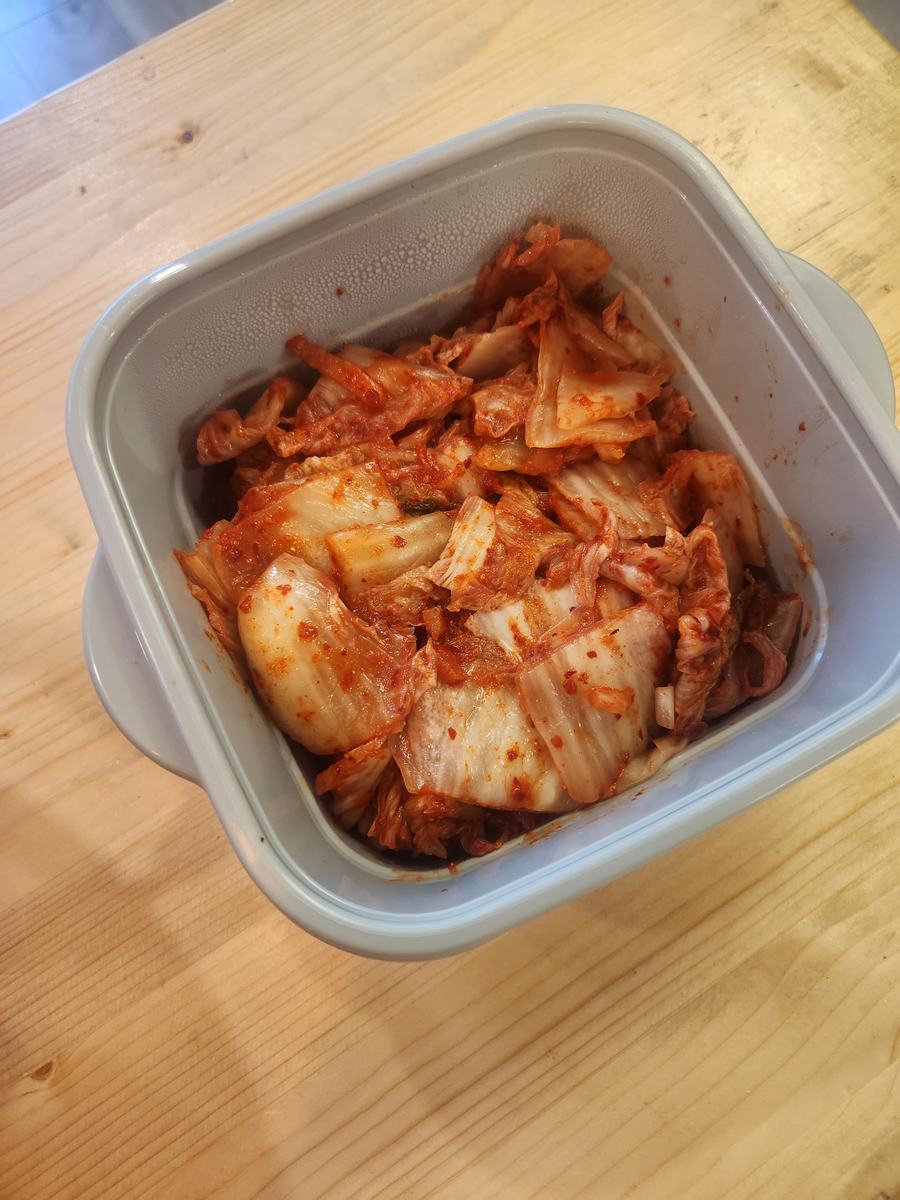
🍚 Lunch Rice · braised chicken · kimchi
Lunch was braised chicken with potatoes, a full cooker of rice and freshly cut kimchi.
☀️ Outside Pool & playground
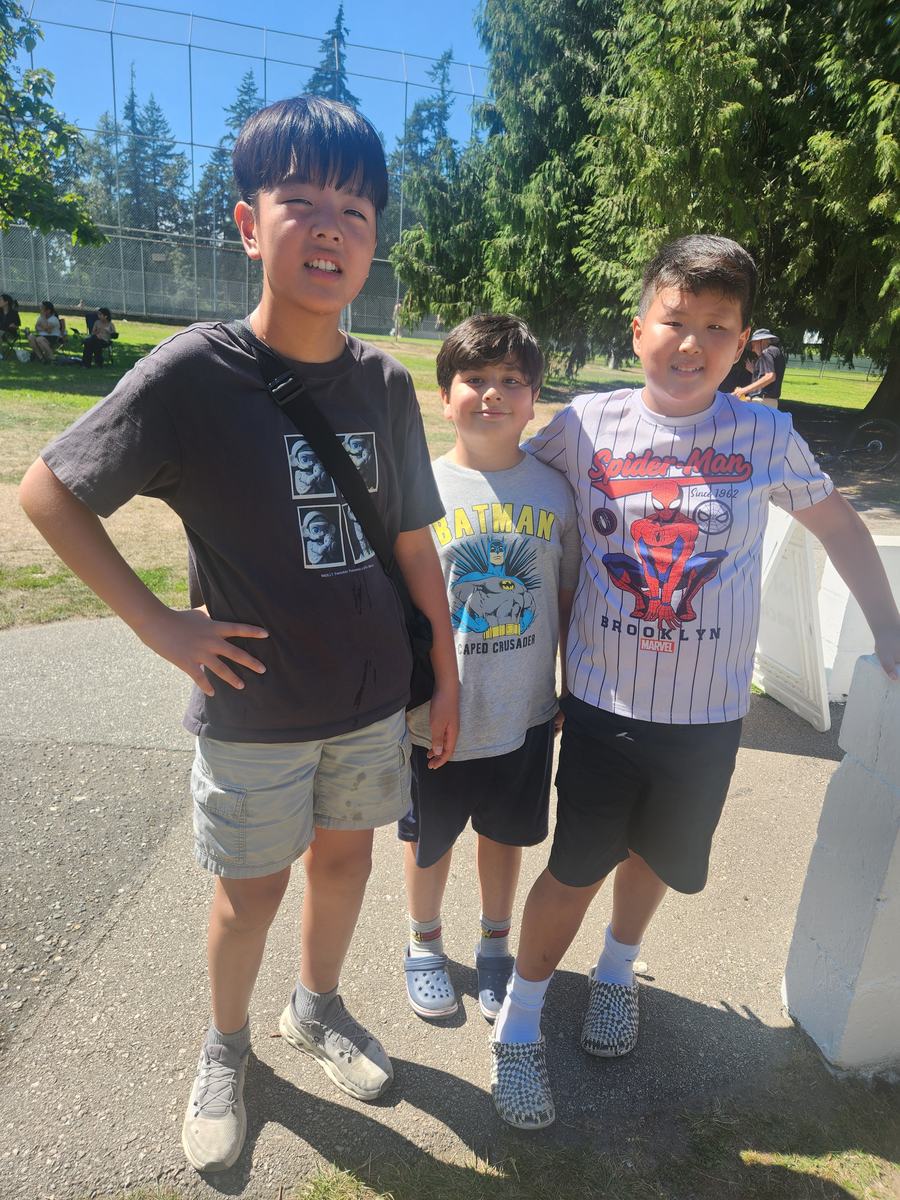
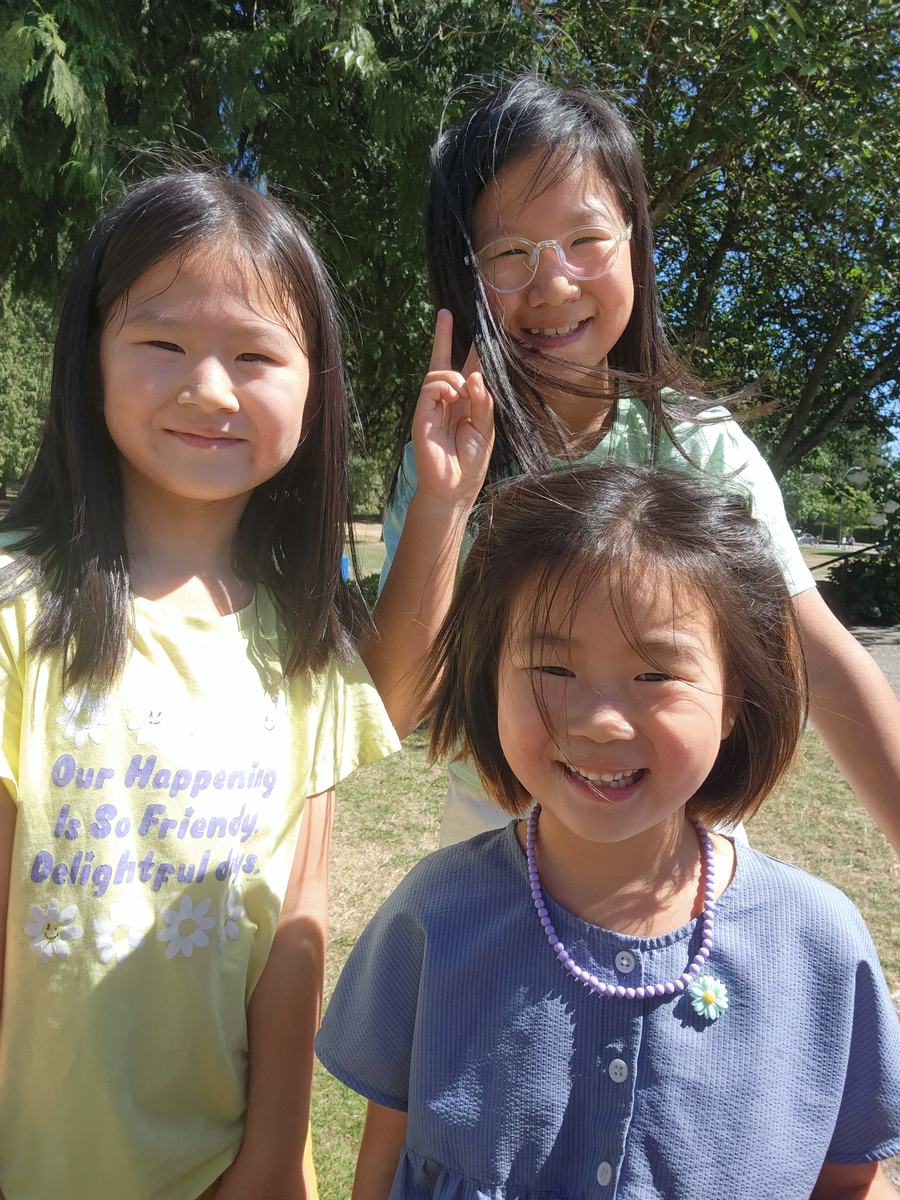
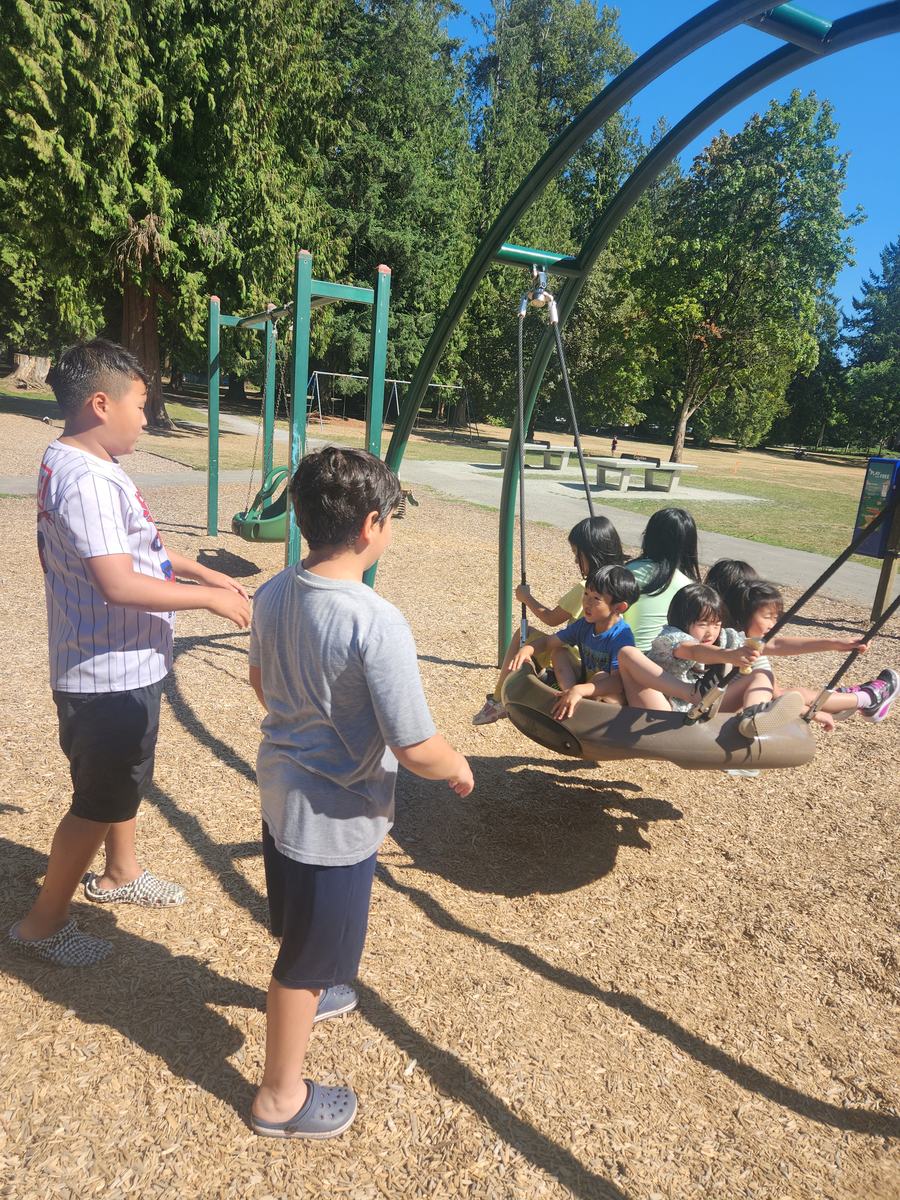
The afternoon went out into the sunshine — the pool, then the park and the swings.
Tomorrow: a test on math and science. Everyone should come ready — and after that, we introduce the next project for the week.
Ask them tonight what CO₂ stands for, and why the bubbles had to come up through the oil. They watched the answer for a full hour. 🫧